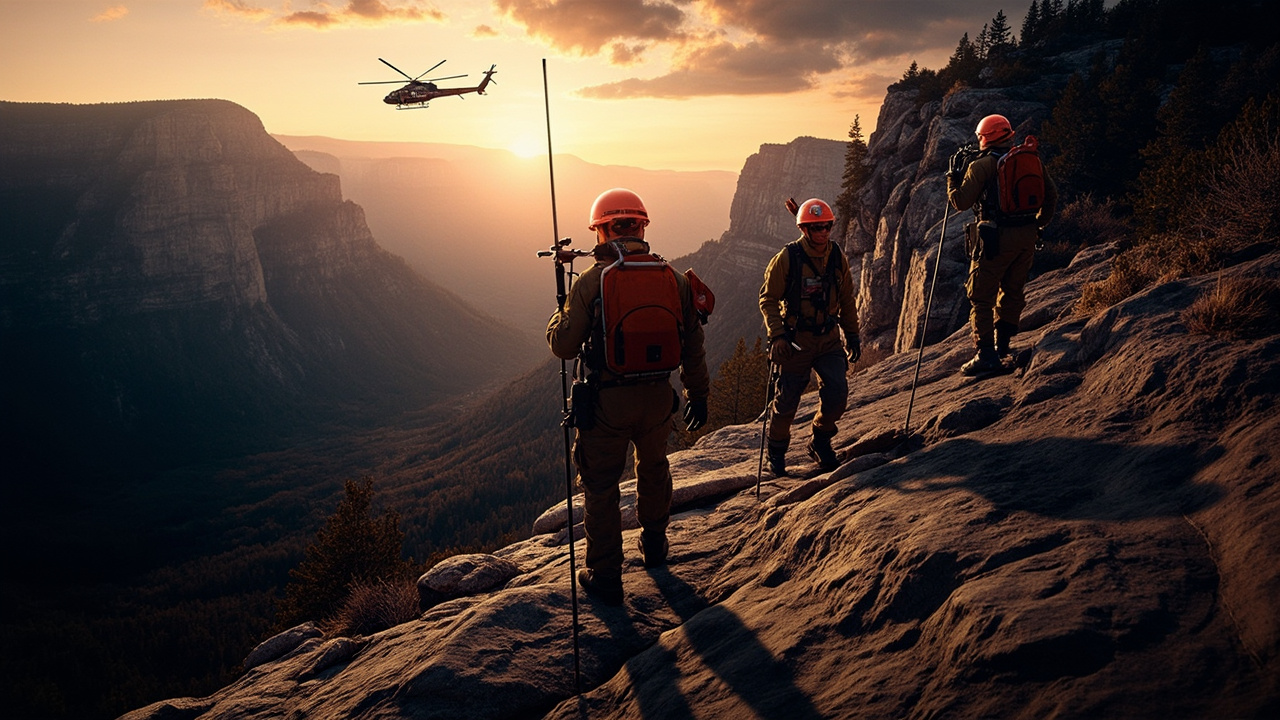
TL;DR: NPS search teams lead inland rescue for lost park visitors — report to a uniformed employee or dial 9-1-1, then use the Investigative Services Branch tip line.
If someone is lost or missing in a National Park Service area, ask any uniformed NPS employee for help immediately and dial 9-1-1 for an emergency, according to Missing Persons in the National Parks (U.S. National Park Service). That same NPS guidance directs visitors to contact the NPS Investigative Services Branch, or the U.S. Park Police for areas in their jurisdiction, and to check the NPS News page filtered by the keyword "missing" or by park site for news about a missing person.
The NPS states it is dedicated to protecting the health, safety, and wellness of visitors and employees. NPS responders play a leading role in locating people who may have become lost or gone missing within the National Park System, and often aid other local, state, and federal agencies outside NPS boundaries. Responders, officers, and special agents are described as the subject-matter experts for inland search-and-rescue operations and missing person investigations, from urban parks to wilderness areas.
Why visitors go missing
Disorientation, accidents, weather and other causes
People may go missing because they become lost or disoriented, suffer an accident, or are delayed by weather or other inclement conditions, according to Missing Persons in the National Parks (U.S. National Park Service). In some cases disappearance is voluntary or the result of a crime. A missing child may involve additional, complex considerations.
No matter the cause, NPS officers and special agents investigate alongside SAR responders. That all-cause approach matters for wilderness readiness because the initial report — where the person started, planned destination, clothing, and equipment — shapes where teams search first.
How large the rescue workload is
3,453 incidents in 2017 and decades of data
In 2017, search-and-rescue teams were deployed for 3,453 incidents in national parks, with 3.5 percent resulting in fatalities, according to Modern Conservationist reporting on National Park Service data. Nearly 331 million people visited U.S. national parks in 2017, a total less than 90,000 visits below the 2016 record and an increase of 45 million visitors from 2014.
The 2017 distribution was concentrated. Lake Mead National Recreation Area recorded 563 incidents, followed by Grand Canyon with 290 and Yosemite with 233. Utah alone experienced a 68 percent increase in such incidents from 2014, the last time NPS had released the data at the time of that May 27, 2019 report.
Longer-term research shows the same pattern at larger scale. From 1992 to 2007 there were 78,488 individuals involved in 65,439 SAR incidents, ending with 2,659 fatalities, 24,288 ill or injured individuals, and 13,212 saves, according to Dead Men Walking: Search and Rescue in US National Parks. On average there were 11.2 SAR incidents each day at an average cost of $895 per operation, with total costs from 1992 to 2007 reaching $58,572,164.
In 2005, 50 percent of the 2,430 SAR operations occurred in just 5 NPS units. Grand Canyon National Park with 307 operations and Gateway National Recreation Area with 293 operations reported the most SAR operations that year. Yosemite National Park accounted for 25 percent of total NPS SAR costs at $1.2 million, while Wrangell-St. Elias National Park and Preserve at $29,310 and Denali National Park and Preserve at $18,345 had the highest average SAR costs.
The authors concluded that without NPS personnel responding, 1 in 5 — 20 percent — of those requesting SAR assistance would be a fatality, and that prevention efforts should focus on the 5 NPS units where 50 percent of incidents occurred.
What activities and groups drive rescues
Hiking leads incidents and fatalities
Hiking was the most common activity requiring SAR assistance at 48 percent, followed by boating at 21 percent, in the 1992 to 2007 review. Hiking was also the activity most likely to result in fatalities. Among fatalities by activity, hiking accounted for 22.8 percent, suicides for 12.1 percent, swimming for 10.1 percent, and boating for 10.1 percent.
The 2017 data showed the same lead activity. Men were the subjects of 1,800 incidents versus 1,300 for women, with sex unknown in 549 cases. Rescues were spread across all generations, with individuals 20 to 29 years old the most represented group.
The cost in 2017 exceeded $3 million, a sum shouldered by taxpayers. Those operations involved 84,000 man hours, with more than 12,000 hours fulfilled by non-NPS employees such as volunteers or members of the U.S. military. NPS faced more than $11 billion in deferred maintenance costs, with an increase of $275 million, or 2.5 percent, in fiscal year 2017 alone attributed in part to increased attendance.
Cold cases show how trips unravel
What investigators still list as unsolved
Cold cases are crimes or incidents — including missing persons — that have yet to be solved and have no active leads, according to Missing Persons in the National Parks (U.S. National Park Service). New information could come from new witness testimony, new or retained physical evidence, activities of a suspect, or other sources.
The NPS Investigative Services Branch roster illustrates how ordinary day hikes and river trips become extended searches:
James Pruitt went missing from Rocky Mountain National Park on February 28, 2019. He was 70 years old, a white male 5 feet 6 inches tall and 150 pounds with blue eyes and brown/gray hair, believed to have been wearing a dark blue jacket, red/orange beanie-style hat, and blue jeans, and carrying a small camera bag with a Nikon Coolpix 900 camera. He left from the Glacier Gorge parking lot on February 28, 2019 for a day hike to an unknown destination. Rangers located his vehicle on March 3, 2019 and determined it had been parked overnight with no backcountry permit associated. Family advised rangers he had no intentions of staying overnight and they had last heard from him on February 28. The National Park Service initiated extensive search efforts, entered limited continuous operations on March 11, 2019 due to lack of clues and extreme winter conditions, and conducted additional coordinated searches during summer and fall 2019.
Jonghyon Won went missing from Grand Canyon National Park on September 17, 2017. He was 45 years old, an Asian male 5 feet 7 inches tall and 121 pounds with brown eyes and black hair. A white Toyota Camry belonging to Won of Los Angeles, California was found at Moran Point on the South Rim on September 17, 2017, previously seen near the New Hance Trailhead. He had no known plans in the area and his whereabouts are unknown.
Peter Jackson went missing on September 17, 2016 after a day hike from White Wolf Campground. He was 74 years old, a white male 5 feet 10 inches tall and 155 pounds with blue eyes and gray hair and beard, in excellent physical condition and carrying a royal blue Outdoor Products daypack. He sent a text message to his son saying he was on his way to the park on September 17, 2016. His vehicle was found at the campground and camping fees were paid through September 21, 2016. The search was placed in continuous, limited mode as of October 2, 2016. In August 2019, his backpack was found in the Ackerson Meadow/Aspen Valley area on the west side of Yosemite National Park.
Heat, river miles and remote plateaus
Grand Canyon cases in continuous, limited mode
Floyd Roberts went missing on June 17, 2016. He was 52 years old, a white male 5 feet 11 inches tall and 170 pounds with brown/grey hair and brown eyes, last seen wearing a red long-sleeved shirt, blue denim jeans, multi-colored mesh Nike Free sneakers, large blue Lowe Alpine Contour backpack, and white-rimmed sunglasses with orange lenses. He became separated from companions during extreme heat conditions while starting a multi-day hike in a remote portion of western Grand Canyon on the Shivwits Plateau. The group planned a 9-day hike that would exit the canyon via Separation Canyon. He was last seen near Kelly Tank heading towards Trail Canyon/214 Mile Canyon in the Shanley Spring area towards the river but may have descended into 209 Mile Canyon. Following an intensive 6-day search effort the incident remains unresolved and the search is in continuous, limited mode.
Morgan Heimer was 22 years old when he went missing. He was a white male 6 feet 0 inches tall and 175 pounds with blond hair and blue eyes, last seen wearing a dark-colored Astral personal flotation device, blue plaid long sleeve shirt, Chaco brand sandals, maroon baseball cap, and brightly colored shorts, and carrying a purple water bottle. He was last seen on June 2, 2015 around Colorado River mile 213 near Pumpkin Springs. The search is in continuous, limited mode.
Drake Kramer went missing on January 31, 2015. He was 21 years old, a white male 5 feet 8 inches tall and 140 pounds with brown hair and blue eyes, wearing dark colored clothes and known to wear a backwards ball cap or dark colored bandana, and drove a silver Mazda 6 sedan to the park. He was last seen at Bright Angel Lodge and is believed to be suicidal. The search is in continuous, limited mode.
How to report and help from the field
Tip line, online form and what to tell rangers
If you see something suspicious in any National Park Service area, stay safe and tell NPS about it, according to Missing Persons in the National Parks (U.S. National Park Service). Ask any uniformed NPS employee for help, or submit a tip. NPS notes it may take time to reach park personnel and areas with cell or internet service.
You do not have to tell NPS who you are, but tell what you know: call the NPS-wide Tip Line at 888-653-0009, use the online Submit a Tip form, email [email protected], and dial 9-1-1 for an emergency. For news about a person not listed on the cold-case roster, filter NPS News releases by the keyword "missing" and by location, or contact a park directly through the Contact Us link at the bottom of each site page.
For wilderness travelers, the preparedness checklist highlighted alongside the 2017 rescue data calls for taking a map and compass and knowing how to read both, knowing skill level and selecting an appropriate trail, planning the route ahead and estimating duration, telling someone where you will be and when you will return, ensuring a phone is charged, staying on designated trails, remaining aware of surroundings, using a GPS-enabled app or device, and trusting instruments.
That list aligns with the incident causes summarized in the same data: inexperienced and unprepared hikers entering without enough food or water, lacking proper gear or clothing, without knowledge of route, or attempting to hike above skill level, with causes of death ranging from exposure to falls to drowning to weather-related causes.