TL;DR: Recovery of Timothy Allen Smith on Sept. 14 closed a three-week search and lifted the Aug. 29 Grand Canyon flood death toll to three.
Human remains located Monday near Crystal Rapids on the Colorado River were identified as Timothy Allen Smith, the last person unaccounted for after late-August flash flooding in Grand Canyon National Park, according to The Associated Press. Smith's wife, Carrie Smith, confirmed the identification Thursday on Facebook, ending a search that left two of his companions already recovered and more than 80 other people rescued during a two-day deluge.
Smith, 53, was a pilot living in Star Valley Ranch in western Wyoming's Star Valley, about 40 miles southwest of Jackson. He grew up in Granbury, Texas. His backcountry companions were Brent Rosenkranz, 42, and John Giusti, 46, both of Granbury, Texas, whose remains were found earlier. The three were together on a multiday hiking, fishing and camping trip when floodwater moved through the canyon.
The identification brought the death toll to three from flooding that devastated the Phantom Ranch area at the canyon bottom and damaged the water pipeline serving the South Rim. The remains were found Monday near Crystal Rapids, with additional detail from CNN placing the recovery about 10 miles downstream from Phantom Ranch. The Coconino County medical examiner confirmed Smith's identity.
The final recovery near Crystal Rapids
Rangers at Grand Canyon National Park located the remains two days before the family's Thursday announcement. Carrie Smith wrote that relatives had spent three weeks waiting and hoping that her husband would return home, then waiting to learn whether remains discovered in the park were his.
In a Tuesday morning Facebook post, she said the family understood that a body had been found a day earlier and asked others to pray with them. On Thursday, she confirmed that the remains were her husband's and said he had been found by park rangers.
She said her husband had been doing something he loved alongside John Giusti and Brent Rosenkranz. She also said the three men loved the Lord and described them as a shining light for him. The National Park Service said the remains were sent to the Coconino County Medical Examiner's Office, which confirmed the identity, according to CNN.
A spokesperson for the U.S. Department of the Interior, Elizabeth Peace, said the National Park Service extended its deepest condolences and expressed gratitude to search teams and partner agencies whose personnel worked in difficult conditions over several weeks on search and recovery efforts. A separate Associated Press account carried by WFLA said the National Park Service issued a Thursday statement thanking searchers and extending condolences to relatives and friends of the three men.
Who was on the backcountry trip
Smith, Rosenkranz and Giusti had traveled into the canyon for a multiday outing centered on hiking, fishing and camping. Smith had long ties to Granbury, where he grew up, before establishing a home with his wife in Star Valley Ranch.
Carrie Smith was identified as his wife of 18 years in one account of the recovery. During the initial search period, she and their children appeared in a Facebook video thanking people for support and prayers. That period left Smith as the only person still missing after rescuers accounted for dozens of others.
The August 29 flooding washed out footbridges and campgrounds around Phantom Ranch, one of the areas hit hardest by the event, according to CNN. Phantom Ranch sits at the canyon bottom and served as a focal point for rescue activity during the two-day storm response.
How rescuers tracked more than 80 survivors
Search teams used night vision and other equipment to locate people needing rescue during the two-day deluge. They relied on the Grand Canyon National Park permit system and checked vehicle license plates to identify visitors who remained unaccounted for.
More than 80 people were rescued during that operation. Soon after the initial rescues, only Smith remained missing, prolonging the search for nearly three weeks until the Monday discovery on the Colorado River.
The permit checks and license-plate review allowed crews to narrow the list of missing backcountry users without relying solely on reports from the field. Night-vision capability supported operations after dark while water remained high and access remained limited.
No additional missing persons from the August flood were reported as unaccounted for after Smith's identification. The recovery therefore resolved the last open missing-person case linked to the late-August event.
Why monsoon rain turned desert drainages lethal
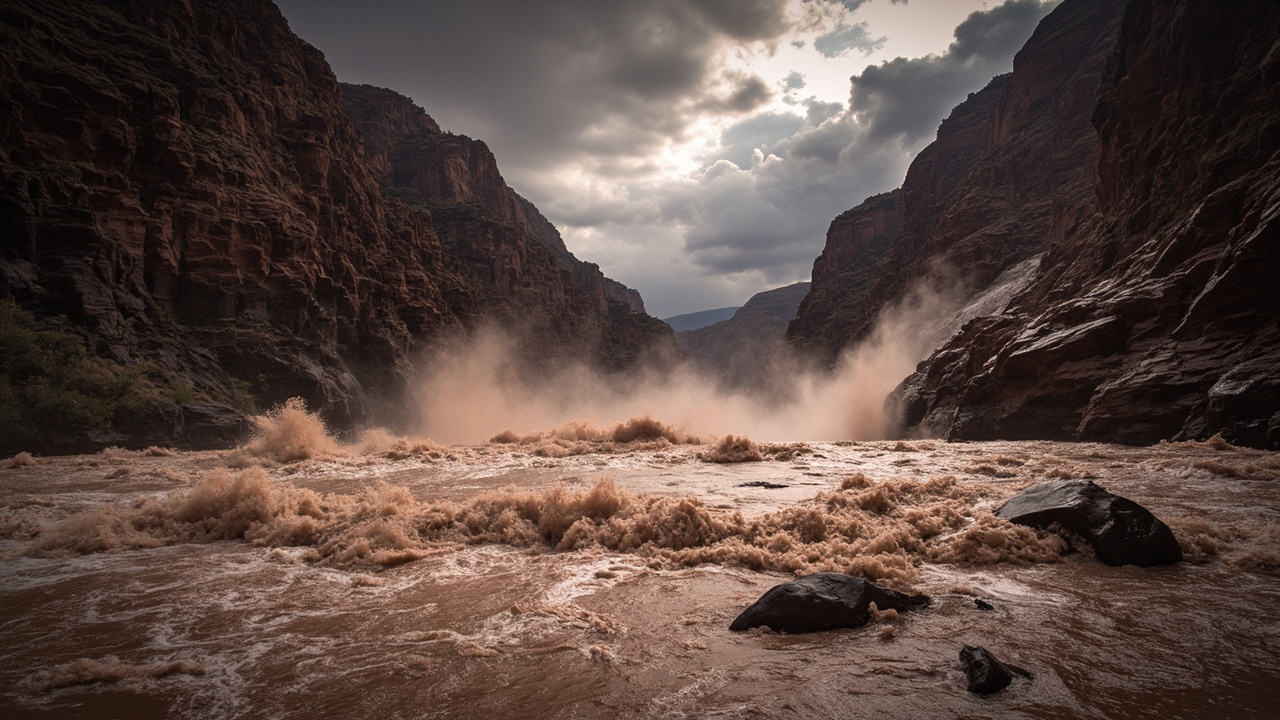
The flooding began Aug. 29 during the summer monsoon season, when clear skies can quickly give way to thunderstorms and heavy rain. A desert landscape can funnel water from heavy rainfall into sudden torrents that move down previously dry gullies and canyons.
Rain fell on part of a North Rim burn area left after a lightning-caused wildfire in July 2025. That fire destroyed the historic Grand Canyon Lodge, cabins and other structures. Burn areas can worsen flash flooding because reduced vegetation leaves less capacity to absorb runoff.
Bright Angel Canyon, where flood impacts were photographed Aug. 31 as it meets the Colorado River, was identified as the scene of flash flooding. Bright Angel Creek and the Colorado River were also named as waterways affected when another storm moved through the canyon on Wednesday.
For wilderness travelers, the sequence underscores how distant rainfall over a burn scar can affect narrow canyons downstream. The park's most-used corridors, including the route ending near Bright Angel Creek, concentrate both foot traffic and runoff during monsoon storms.
Pipeline damage and inner-canyon water shutoff
The late-August flood damaged a pipeline spanning the canyon that supplies water to millions of tourists and residents. Insufficient water caused all overnight lodging to be halted until the pipeline could be restored.
National Park Service officials said recently that they expected to restore a reliable water supply in the canyon in weeks rather than months after determining that most of a near-complete pipeline project was not damaged during the flash flood. That assessment shifted the expected timeline from a months-long outage to a shorter repair period.
Many hiking trails and lodging areas remain closed. Water has been shut off in the inner canyon, prompting advisories that hikers bring their own water or water filtration devices. The advisory applies directly to readiness planning because inner-canyon sources cannot be assumed available after pipeline damage.
The pipeline interruption also affects South Rim operations because the system carries water across the canyon to support residents and visitors. Lodging restrictions were tied to insufficient supply rather than solely to trail damage.
A second flood struck during the recovery week
Another flash flood moved through the canyon along Bright Angel Creek and the Colorado River during a storm Wednesday, park officials said. No injuries were reported in that event.
Authorities said efforts to minimize personnel in the canyon before the storm, combined with flash flood warnings, enabled crews to reach safety. Damage assessments were underway after the Wednesday flood.
The back-to-back events left response crews managing both recovery operations for the August victims and precautionary evacuations for active weather. Limiting the number of staff in the canyon reduced exposure before water levels rose.
The Wednesday storm demonstrated that monsoon-season hazards continued after the initial disaster. Park warnings remained the mechanism for moving crews out of flood-prone drainages before arrival of high water.
What backcountry planners should carry forward
Bring personal water or a filtration device when entering the inner canyon while the pipeline system remains impaired. Park advisories specifically call for hikers to carry their own water or filtration devices because inner-canyon water has been shut off.
Check flash-flood warnings before entering Bright Angel Creek, Phantom Ranch-area routes and Colorado River corridors during monsoon season. Authorities credited warnings and reduced staffing with allowing crews to reach safety before the Wednesday flood.
Expect trail and lodging closures to continue around damaged sections. Many hiking trails and lodging areas remain closed while assessments and water-system repairs proceed.
Leave a traceable itinerary through the park permit system and a vehicle at a documented location. Searchers used permits and license-plate checks to track missing visitors and direct rescues during the August response.
Prepare for rapid change from clear skies to thunderstorms and heavy rain in late summer. The August flood began under seasonal conditions in which desert drainages converted rainfall into torrents capable of destroying campgrounds, footbridges and water infrastructure.
Sources referenced
- Body found in Grand Canyon was missing hiker, wife says, bringing flood death toll to 3 - ABC News (https://ingest.abcnews.com/US/wireStory/body-found-grand-canyon-missing-hiker-wife-bringing-136528811)
- Missing hiker in Grand Canyon identified as dead weeks after deadly flooding | CNN (https://www.cnn.com/2026/09/15/us/grand-canyon-human-remains-found)