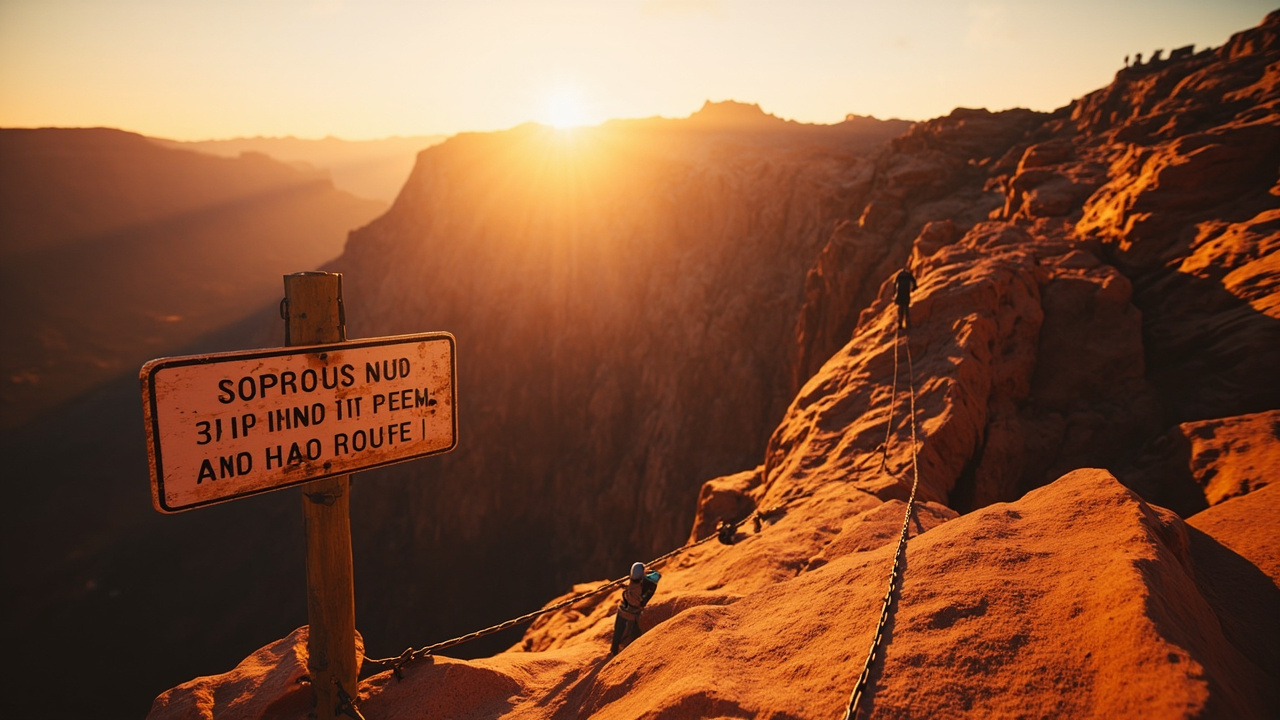
TL;DR: Angels Landing in Zion National Park was temporarily closed on Saturday, September 20, 2026, for a search and rescue operation, with no cause released by 7 p.m.
Saturday closure stops all movement on the chains
Angels Landing was shut to hikers on Saturday afternoon because rangers opened a search and rescue operation on the chain-assisted route, according to the National Park Service as reported by FOX 13 Now.
The agency posted its visitor alert just after 2:30 p.m., warning that the route was temporarily closed for the operation, according to FOX 13 Now.
Officials had not shared information explaining what prompted the response, according to FOX 13 Now.
As of 7 p.m. that evening, the National Park Service had not updated its original notice, according to FOX 13 Now.
That lack of an update left permit holders and day visitors without a stated cause or patient condition through the evening, according to Rolling Out.
The Zion Canyon Visitors Bureau indicated the trail was expected to reopen Sunday morning once dispatch cleared the scene, according to Rolling Out.
For wilderness readiness, the message is direct: a closure notice means stay off the route, do not travel to the trailhead to wait it out, and check Zion's alert page before driving to Springdale, according to Rolling Out.
Where the closure applies
The closure centered on Angels Landing inside Zion National Park near Springdale, Utah, according to FOX 13 Now.
Rolling Out described the affected ground as the narrow chain-assisted route leading toward the summit.
That final approach runs for a half mile chained section that leads to the summit, according to Rolling Out.
The permit-controlled ground begins at Scout Lookout and continues to the summit, according to Rolling Out.
Scout Lookout is the last stop before the chains begin, according to Rolling Out.
Visitors who hike the West Rim Trail near Angels Landing often reach Scout Lookout and then face the decision to enter the chained ground, according to Rolling Out.
When rangers close the route, that decision is removed for the duration of the operation.
Why this short ridge produces repeated rescues
Many consider Angels Landing to be one of the most dangerous trails in the country's national parks, according to FOX 13 Now.
The final stretch follows a sandstone ridge with drop-offs exceeding 1,000 feet in places, with only a chain bolted into the rock for hand support, according to Rolling Out.
FOX 13 Now reported the trail has been the site of more than a dozen deaths since 2000.
Rolling Out reported records show more than a dozen people have fallen since 2000, with 13 confirmed deaths.
That history is rarely front of mind when the summit is discussed as an iconic view, according to Rolling Out.
Conditions on the ridge can turn serious with afternoon heat, loose rock, or a lapse in attention near the drop-offs, according to Rolling Out.
The route is marketed in Utah outdoor tourism as a bucket-list hike and rite of passage, a framing that can undersell how quickly exposure becomes serious, according to Rolling Out.
For readiness planning, the useful distinction is geometry rather than fitness: a narrow fin of rock, long exposure on both sides, and limited room to pass or recover from a slip.
What the April incident shows about rescue timelines
The latest fatal fall before Saturday occurred in April, when a 68-year-old Texas man fell during an afternoon hike, according to FOX 13 Now.
Rolling Out identified the man as Gilberto Ramos, age 68, from Laredo, Texas.
He fell to his death near Big Bend on the north side of the formation, according to Rolling Out.
The same type of multi-agency response deployed in April: rangers, Washington County Sheriff's Office personnel, Hurricane Valley Fire and Rescue, and sometimes Kane County Search and Rescue coordinate on the half mile chained section, according to Rolling Out.
His body was not recovered until that evening, according to Rolling Out.
The trail stayed shut through the next morning while crews worked the scene, according to Rolling Out.
Historically, once a search and rescue operation concludes, the park reopens the trail within a day, as it did after the April incident, according to Rolling Out.
That pattern explains why an afternoon closure can extend through the night even when no new information is released.
Crews need the route clear to move personnel, equipment, and a patient or recovery operation without hiker traffic on the chains.
What the permit controls — and what it does not
Zion runs a lottery program requiring anyone hiking from Scout Lookout to the summit to hold a permit, issued either through a seasonal drawing or a day-before lottery, according to Rolling Out.
The idea was crowd control and safety, according to Rolling Out.
A permit regulates how many people are on the trail at once, not how prepared any individual hiker actually is, according to Rolling Out.
The permit is described by the park itself as an opportunity, not a guarantee, and conditions can still force a closure at any time regardless of who holds a slot that day, according to Rolling Out.
That status matters on a closure day: holding a valid slot does not preserve access during an active operation.
There is no indication so far that Saturday's closure will change permit numbers or add new signage, according to Rolling Out.
Anyone with a permit for the weekend should check Zion's alert page before driving to Springdale, since access could remain limited depending on how the operation wraps up, according to Rolling Out.
Readiness checklist for permit holders caught by a closure
Do not attempt to enter the chained section after a closure alert is posted.
Treat the 2:30 p.m. alert and the absence of a 7 p.m. update as a signal that the scene remained active into the evening, according to FOX 13 Now and Rolling Out.
Monitor the park alert page rather than relying on social posts or trailhead rumor.
Keep plans flexible for Sunday morning, because the expected reopening depended on dispatch clearing the scene, according to Rolling Out.
Understand that Scout Lookout remains the natural turnaround point when the upper route is unavailable.
Visitors often describe a mix of respect and casualness once they reach Scout Lookout, according to Rolling Out, which makes a pre-trip turnaround rule valuable before fatigue or summit pressure builds.
Review exposure honestly: if heights, heat, loose footing, or crowding on the half mile chained section raise doubt, use Scout Lookout as the day's high point.
What to watch after the scene clears
The park historically reopens within a day after operations conclude, according to Rolling Out.
That does not mean new safety rules follow each incident.
The broader conversation about permit numbers or signage tends to resurface every time a serious fall makes headlines, according to Rolling Out.
For now, the verified facts for September 20 remain narrow: a Saturday afternoon temporary closure, an alert just after 2:30 p.m., no cause or condition update by 7 p.m., an expectation of a Sunday morning reopening once dispatch cleared the scene, and a long fatal-fall history that keeps this ridge at the center of Zion readiness planning, according to FOX 13 Now and Rolling Out.
Sources referenced
- Angels Landing trail inside Zion NP closed for search and rescue operation - FOX 13 Now (https://www.fox13now.com/news/local-news/utahs-national-parks/angels-landing-trail-inside-zion-national-park-closed-for-search-and-rescue-operation)
- Angels Landing closed after Zion National Park search and rescue operation - Rolling Out (https://rollingout.com/2026/09/20/angels-landing-zion-national-park/)