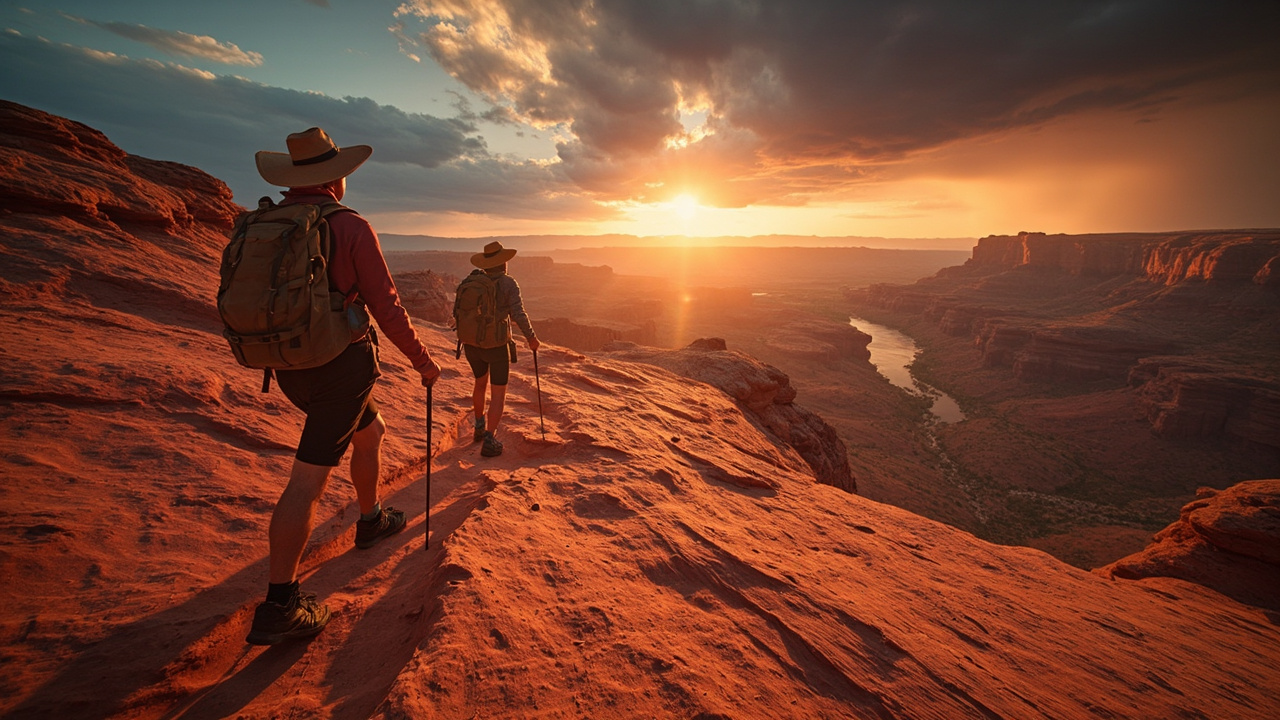
TL;DR: Carry at least one liter of water per person per hour in extreme heat, start exposed Utah desert hikes at sunrise, and stay out of narrow canyons when monsoon forecasts threaten, a discipline underscored when Zion National Park closed slot canyons under a flash-flood warning on Aug. 31, 2026.
Why Utah desert miles deceive hikers
Open red rock makes destinations look close under clear skies with almost no shade, and two hours later the same landscape can feel very different, according to Pure Utah.
Utah desert hikes can become dangerous quickly because of heat, limited shade, dry air, and remote terrain, according to Pure Utah.
Heat, dehydration, flash floods, exposed terrain, and poor cell service can turn an ordinary hike into a serious problem, according to Pure Utah.
The warning gained fresh weight on Aug. 31, 2026, when heavy rain pounded Zion National Park on Monday, triggering flash flooding, according to WBAL Baltimore News.
The National Weather Service in Salt Lake City issued a flash-flood warning for Zion that night in effect until 11 p.m. MDT Monday, according to WBAL Baltimore News.
At 8:51 p.m. MDT, the National Park Service reported flash flooding from earlier thunderstorms producing heavy rain across Zion National Park, according to WBAL Baltimore News.
A gauge at the North Fork of the Virgin River in Springdale reported flows peaking over 5500 cfs at 8 p.m. MDT, with flash flooding already occurring, according to a National Weather Service alert republished by Defcon Level.
The park issued temporary closures of all slot canyons, including the Narrows, with closure signs posted at key locations, according to KUTV.
The Zion-Mount Carmel Highway through Zion National Park was closed in both directions Tuesday morning, Sept. 1, 2026, because of a rockfall, from the park's East Entrance to Canyon Junction, according to KUTV.
Zion Canyon Scenic Drive was also closed to pedestrians and bicyclists while shuttle service along the Scenic Drive was operating normally, according to KUTV.
The Watchman and Pa'rus trails closed at the Visitor Center Road as crews worked to remove mud and debris, according to KUTV.
A park spokesperson said flash floods are a known hazard in Zion, particularly during the late summer monsoon season, and can happen suddenly in slot canyons, across slickrock, and in drainages even when skies appear clear overhead, according to KUTV.
Late last month, the National Park Service reminded visitors that July through September can bring adventure but may also include rapidly changing weather, with clear morning skies quickly building into intense afternoon thunderstorms that transform the landscape and create serious hazards, according to WBAL Baltimore News.
Carry water by the hour, not by thirst
Water is the first thing to think about, according to Pure Utah.
Utah's dry air can make sweat evaporate quickly, so hikers may not realize how much fluid they are losing, according to Pure Utah.
Current Utah State Parks guidance at Goblin Valley advises hikers during extreme heat to carry at least 32 ounces, roughly one liter, of water per person per hour, according to Pure Utah.
Utah State Parks gives similar advice for strenuous activity in hot conditions, according to Pure Utah.
The exact amount needed depends on temperature, trail difficulty, exposure, hiking speed, body size, and trip length, according to Pure Utah.
Do not use thirst as the only signal, according to Pure Utah.
Bring water before it is needed, according to Pure Utah.
For longer hikes, salty snacks or electrolytes can also be useful when sweating heavily, according to Pure Utah.
Keep some water in reserve for the return trip, because the trail does not end at the overlook, according to Pure Utah.
Utah State Parks identifies spring and autumn as the best times to visit Goblin Valley and notes that summer temperatures can exceed 100 degrees, in country described as exposed desert with no shade and no water source, according to Provo.com.
Provo.com reports the local practice around Goblin Valley is to treat fuel, food, and cell coverage as unreliable well before arrival and to fill up in the last real town.
Start at sunrise and avoid midday heat
Southern Utah can become brutally hot in summer, according to Pure Utah.
Snow Canyon State Park warns that summer daytime temperatures can reach 100°F to 117°F and advises avoiding strenuous outdoor activities during the hottest part of the day, according to Pure Utah.
An early start means hiking during cooler temperatures, according to Pure Utah.
An early start leaves more daylight available if the hike takes longer than expected, according to Pure Utah.
An early start often gets hikers back near the trailhead before afternoon thunderstorms begin developing, according to Pure Utah.
For exposed desert trails, sunrise is not an absurdly early starting time and may be the most comfortable part of the entire day, according to Pure Utah.
Zion says temperatures regularly exceed 100°F during the May-to-September summer period, according to Pure Utah's companion Mighty 5 guide published Sept. 4, 2026.
That companion guide advises using the mornings on summer visits, starting exposed hikes early, carrying enough water, and leaving flexible time rather than hiking hard from noon through late afternoon.
Treat distant storms as a canyon warning
Flash floods deserve special attention in Utah because many of the most interesting landscapes are canyons, according to Pure Utah.
Water does not need to fall directly overhead to create a problem, according to Pure Utah.
A thunderstorm miles upstream can send water into a drainage, wash, or narrow canyon, according to Pure Utah.
Utah State Parks advises checking weather forecasts and flash-flood alerts for the surrounding area before entering canyons, according to Pure Utah.
Narrow canyons and dry streambeds are particularly vulnerable, according to Pure Utah.
Warning signs can include rapidly rising water, muddy water where it was previously clear, debris moving downstream, sudden rushing sounds, nearby thunderstorms, and dark storm clouds, according to Pure Utah.
If hikers encounter rising water, they should move toward higher ground, according to Pure Utah.
Hikers should not attempt to cross a flooded wash simply because the trail continues on the other side, according to Pure Utah.
A desert flash flood is not something to wait out from the bottom of a canyon, according to Pure Utah.
July through September is generally monsoon season in southern Utah, when a clear morning can develop into thunderstorms later in the day and intense rain upstream can create dangerous flash floods even if weather directly above looks less severe, according to Pure Utah's Mighty 5 guide.
Check the current forecast and park alerts before entering slot canyons or river routes, and do not treat a flash-flood warning as an inconvenience to work around, according to Pure Utah's Mighty 5 guide.
Navigate without a cell signal
Cell service disappears surprisingly quickly once hikers leave Utah's highways and towns, according to Pure Utah.
Visit Utah recommends carrying a map or GPS system because mobile service can fail in remote areas, according to Pure Utah.
Download the trail map before the trip, according to Pure Utah.
Take a screenshot of important junctions if needed, according to Pure Utah.
Hikers should know approximately total distance, elevation gain, major turns, turnaround points, trailhead location, and alternate exits, according to Pure Utah.
Do not assume a heavily visited trail will always be obvious, according to Pure Utah.
Red rock, sandy washes, slickrock, and informal social trails can make navigation less clear than expected, according to Pure Utah.
Before leaving, check the official page for the park, forest, monument, or recreation area managing the trail, according to Pure Utah.
Block sun, file a trip plan, and quit early
Shade can be rare on desert routes, according to Pure Utah.
A wide-brimmed hat, sunscreen, sunglasses, and lightweight clothing can make a large difference during a long exposed hike, according to Pure Utah.
Utah State Parks recommends sun protection and lightweight clothing during summer recreation, according to Pure Utah.
Many Utah trails sit thousands of feet above sea level, where strong sunlight combines with cooler air that can make hikers underestimate exposure, according to Pure Utah.
Apply sunscreen before the hike rather than waiting until shoulders already feel hot, according to Pure Utah.
Sending trip details takes about thirty seconds, according to Pure Utah.
Send someone the trail name, trailhead, expected route, start time, and expected return time, according to Pure Utah.
Utah State Parks specifically recommends letting another person know where hikers are going and when they plan to return, according to Pure Utah.
That step becomes especially important on remote trails without cell service, because search-and-rescue teams have a much better starting point when someone knows the intended location, according to Pure Utah.
Turn around when too much water has been used, the temperature is becoming unsafe, thunderstorms are building, the route is uncertain, someone in the group is struggling, or daylight is running out, according to Pure Utah.
Sources referenced
- How to Hike Safely in Utah’s Desert Country - Pure Utah (https://pureutah.org/how-to-hike-safely-in-utahs-desert-country/)
- Video shows water pouring over a cliff at Zion National Park in Utah | WBAL Baltimore News (https://www.wbal.com/video-shows-water-pouring-over-a-cliff-at-zion-national-park-in-utah)