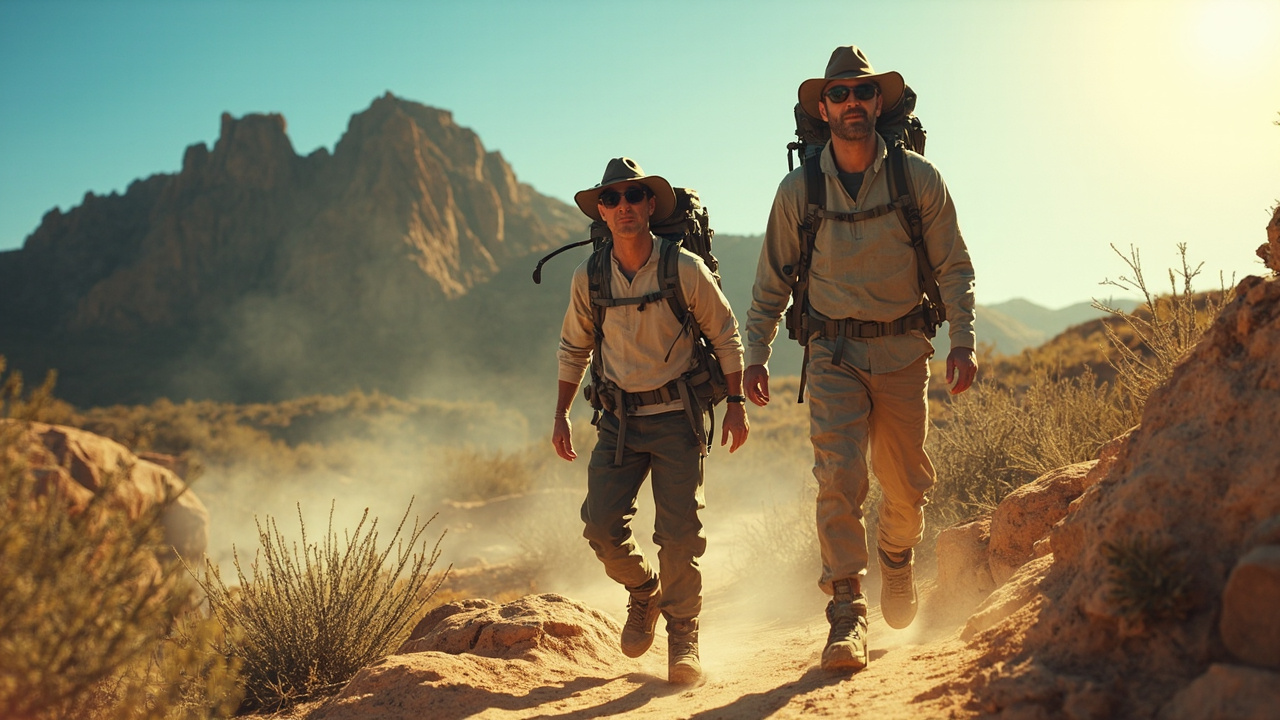
7 Essential Hiking Safety Tips in Summer
TL;DR: Time your hike outside midday heat, wear light covering clothing, carry about a litre of water per person per hour plus electrolytes, protect skin with SPF 30+, watch weather and air quality, know heat-illness signs, and leave a route plan with a trusted contact.
Summer trails through mountains, lakes, shorelines and canyons reward preparation and punish guesswork. According to 7 Essential Hiking Safety Tips in Summer, midday heat combined with sun exposure can turn a family outing into illness or danger when timing, clothing, fluids, sun protection, weather awareness, heat response and emergency planning are overlooked. According to Desert Hiking Safety in Fountain Hills | FHMC AZ, most desert rescues involve fit people who carried too little water and underestimated fluid loss, not reckless behavior.
Use the seven practices below as a pre-departure checklist and an on-trail decision guide.
1. Time your hike around heat and sun
Plan start and finish times before leaving home. According to 7 Essential Hiking Safety Tips in Summer, the hottest interval is usually around noon to 3 p.m., and avoiding that window by finishing by early afternoon or starting after 3 p.m. reduces heat strain.
Seek shade and cooler air early in the morning or early in the evening. The same guide aligns cooler starts with avoiding the strongest ultraviolet rays between 10 a.m. and 4 p.m.
Consider night hiking in hot locales for relief when daytime temperatures remain uncomfortable. In low-desert summer conditions, Fountain Hills Medical Center advises finishing before 8 a.m. or starting after 6 p.m., and notes that rock and sand radiate stored heat for hours after sunset so evening routes can feel hotter than air temperature suggests.
Treat midday hiking in the low desert from June through September as genuinely dangerous rather than merely uncomfortable. Several Valley municipalities close popular trails during extreme heat warnings, according to that clinic guide.
2. Wear light, covering clothing and proper footwear
Choose light-colored clothes that reflect solar rays away from the body. Technical shirts and pants wick sweat away from skin more effectively than cotton.
Understand the cotton trade-off in summer. According to 7 Essential Hiking Safety Tips in Summer, moisture-retaining cotton may feel cooler initially but can cause painful chafing, and wearing cotton into evening or night becomes risky because temperatures fall after sunset and damp fabric chills the core quickly.
Add sun-protective layers rather than exposing more skin. Fountain Hills Medical Center recommends a wide-brimmed hat, sunglasses and light long sleeves, noting that covering keeps hikers cooler than bare skin under direct desert sun.
Match footwear to rocky ground. The clinic guide calls for closed-toe shoes with good grip, ideally providing support above the ankle on uneven rock.
Break in new boots on short walks first and test uphill and downhill comfort before committing to a long route. For longer hikes, specialist moisture-managing socks that fit securely without wrinkles are preferable to ordinary cotton socks.
3. Hydrate before, during and after — with electrolytes
Begin hydrating in the days before and on the morning of the hike. According to 7 Essential Hiking Safety Tips in Summer, inadequate intake leads to dehydration with dizziness, fatigue, weakness and irritability, while thirst, infrequent bathroom breaks, or dark and strong-smelling urine signal need for more fluids.
Avoid both under-drinking and over-drinking. The same guide warns that excess fluid dilutes blood sodium and causes cells to swell, producing bloating, headache and fatigue, so steady prevention works better than drinking a large volume immediately before departure.
Carry far more than one bottle. According to Desert Hiking Safety in Fountain Hills | FHMC AZ, a working figure is about a litre per person per hour of hiking in heat, with higher needs on strenuous climbs, meaning two people on a two-hour summer hike should carry about four litres between them and expect to drink most of it.
Add electrolytes on outings longer than one hour. Drinking large amounts of plain water during prolonged heavy sweating can dilute blood sodium and trigger confusion, nausea and headache, a risk easily reduced with an electrolyte tablet or drink.
Start hydrated on the day. The clinic guide states that drinking a pint before setting off delivers more benefit than carrying an extra pint.
4. Protect skin from ultraviolet exposure
Limit direct exposure by remaining in shade and avoiding peak hours from 10 a.m. to 4 p.m. when route choice allows. When shade is unavailable along the route, cover skin with UPF fabric, a wide-brimmed hat and sunglasses.
Apply at least SPF 30 sunscreen to all exposed skin. According to 7 Essential Hiking Safety Tips in Summer, reapplication at least every two hours is needed, with a timer as a reminder.
Reapply SPF 30+ sunscreen during the hike and wear protective headwear and eyewear throughout sun-exposed sections. Fountain Hills Medical Center lists hat, sunglasses, sunscreen and light long sleeves as core sun protection for desert travel.
5. Monitor weather, storms and air quality
Research area hazards before departure and track advisories for packing and routing decisions. According to 7 Essential Hiking Safety Tips in Summer, summer in the West brings lightning and thunderstorms, monsoons and flash flooding, with rapid shifts that demand advance awareness.
Check forecast temperature, heat warnings and monsoon storm risk specifically. Fountain Hills Medical Center places monsoon flash-flood risk roughly from July to September, when a distant storm can send water down a dry wash without local warning.
Never cross a flowing wash and never camp or rest in a wash when storms are forecast. Move to high ground and wait, because flood water moves faster and with more force than appearance suggests and vehicles do not provide protection.
Leave ridges and summits if a storm builds because lightning threatens exposed high points. Watch air quality as well, especially as wildfires grow more prevalent across the West, since fine particles in wildfire smoke can damage lungs whether fire burns nearby or in another state.
6. Recognize and treat heat exhaustion before heatstroke develops
Learn early symptoms and act at the first sign rather than the third. According to Desert Hiking Safety in Fountain Hills | FHMC AZ, turn around immediately for dizziness or lightheadedness, nausea, headache, muscle cramps, stopped sweating in heat, sudden chill, confusion or difficulty making simple decisions, or a companion becoming unusually quiet.
Understand that heat exhaustion involves headache, dizziness, profuse sweating, clammy skin, shallow breathing and muscle cramps. According to 7 Essential Hiking Safety Tips in Summer, resting in shade and drinking water helps cooling, including shade or a location with ice or air conditioning to lower body temperature.
Know the threshold described by Heat Exhaustion While Hiking | JHB Hiking: gradual body-temperature rise above 38 °C marks heat exhaustion with listlessness, weakness, dizziness, nausea, vomiting, rapid pulse, cool and clammy or warm and moist skin, irritability, trouble focusing, headache, cramps and unusual tiredness, while core temperature above 40 °C indicates heatstroke with confusion, slurred speech, hallucination, seizure or blackout.
Stop, reach shade, lie down and remove excess or tight clothing when warning signs appear. Sip water or a cool electrolyte drink without excess, fan the person, apply wet cloths, soak or mist skin where possible, and place cold packs under arms, in the groin or on the neck if available.
Call for emergency help when confusion, slurred speech, unconsciousness, very hot dry skin, racing breath and pulse, or neurological changes appear. Do not give drinks to someone confused or drowsy, move the person to a cool place, keep the person still, and cool with wet cloths and fanning while awaiting responders.
7. Leave an emergency plan and carry signaling essentials
Hike with a buddy when possible and always tell a reliable person where you are going and when you will return so that person can call for help if needed. According to 7 Essential Hiking Safety Tips in Summer, include general route, expected duration, check-back time, and who to call if you do not appear, whether 911 or local search and rescue.
Treat that notification as the highest-value step because it determines how quickly search begins. Fountain Hills Medical Center likewise directs hikers to share trail, route and expected return time, check the forecast, set a turn-around time before leaving and honor it regardless of proximity to the summit, charge the phone fully while recognizing patchy or absent canyon coverage, and download the trail map offline or carry paper.
Pack a phone with offline map, head torch, small first-aid kit, snacks with salt, and a whistle audible farther than shouting and usable when too tired to yell. Leave earbuds out of both ears to retain ability to hear a rattlesnake rattle or a companion call.
Call 911 for confusion, collapse, suspected heatstroke, rattlesnake bite, significant fall or chest pain, providing trailhead and route details. In South Africa, according to Heat Exhaustion While Hiking | JHB Hiking, call 112 from a mobile phone or 10177 for an ambulance.