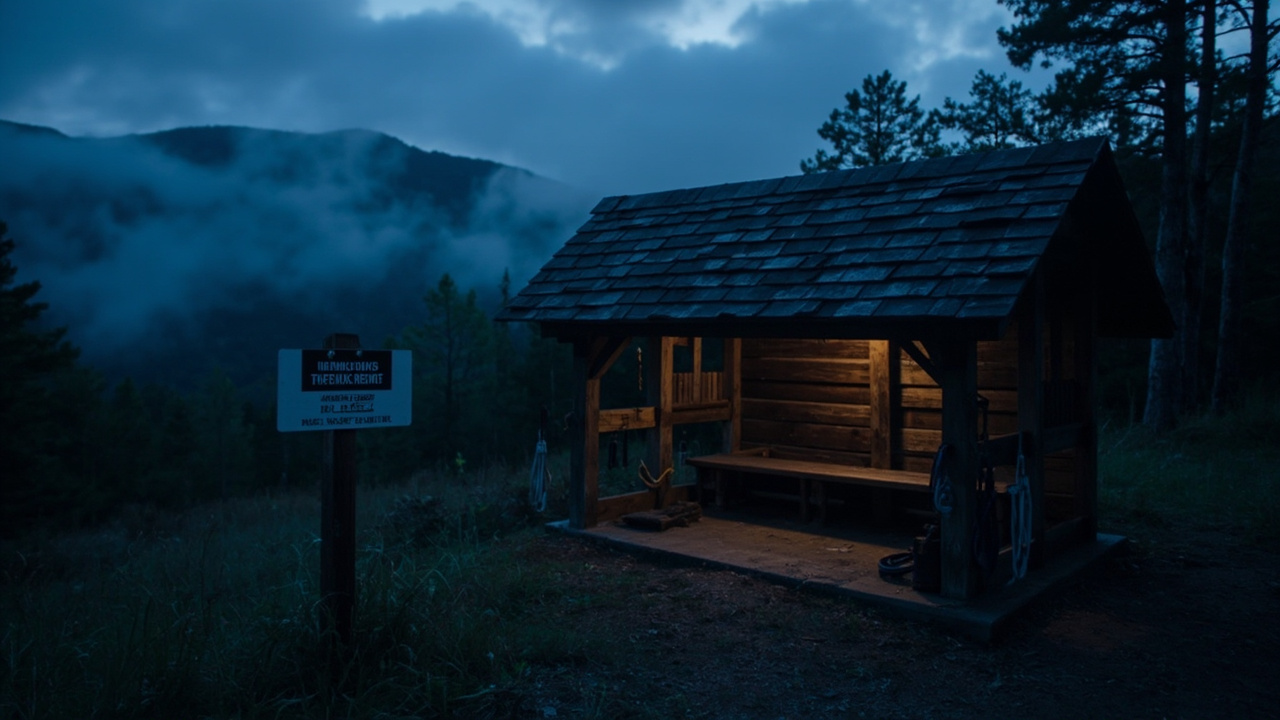
TL;DR: Great Smoky Mountains National Park closed Cosby Knob Shelter at NOBO mile 231.4 because of bear activity, and hikers should skip all stops there while using bear cables and canisters correctly.
Cosby Knob Shelter Is Closed To All Trail Use
According to the Appalachian Trail Conservancy, Great Smoky Mountains National Park closed Cosby Knob Shelter because of bear activity. The closure notice is listed for North Carolina and Tennessee under the animal category. The Conservancy dated the alert October 9, 2026. The site sits at NOBO mile 231.4 on the Appalachian Trail.
The instruction is broader than an overnight ban. Hikers should not plan to stay at the shelter. Hikers should not stop at the location for breaks. Hikers should not stop there to use the privy. Hikers should not stop there for lunch. Hikers moving through the section should use caution.
The Conservancy directs hikers seeking more detail to the park website. The park maintains the current conditions page for closure information. The Conservancy also operates a Bear Encounter Report form for Appalachian Trail sightings. Early action when a bear begins seeking human food helps protect hikers and bears.
Why A Full No-Stop Closure Matters For Readiness
A closed shelter still attracts tired hikers, especially in rain or near dark. Skipping the site entirely removes food odors, trash deposits, and nighttime activity from an area where a bear is already active. That reduction in reward helps prevent conditioning to human food. Conditioning happens when bears learn that shelters and campsites provide easy meals. Once that pattern starts, both people and bears face greater risk.
The same Appalachian Trail Conservancy update warns that caution is needed while hiking through the closed area, not only at the structure itself. A bear accustomed to shelter traffic may patrol nearby trail, water sources, and woods edges. Hikers should stay alert, keep groups together where possible, make noise in limited visibility, and keep food secured while moving. Food should never sit unattended on a pack, log, or rock while someone visits a viewpoint or privy elsewhere.
A separate Conservancy report from October 6, 2026, described recent bear activity at Spaniard Knob campsite in Georgia at NOBO mile 49.3. That bear reportedly showed little fear of people despite yelling and attempts to scare it away. That example shows why the Conservancy emphasizes reporting strange behavior, including lack of fear, entry into campsites, food theft, or aggression. Reporting allows land managers to intervene before behavior escalates.
Storm Hazards Overlapped The Closure Weekend
The Cosby Knob closure arrived during a dangerous weather window for the southern Appalachian Trail. According to the Appalachian Trail Conservancy, the National Hurricane Center updated the predicted track of Hurricane Isaias, with impacts expected on the Trail in Georgia, North Carolina, Tennessee, and Virginia. Heavy rain, flash floods, and high winds were predicted from Georgia through southwest Virginia, with possible heavy rain and flash flooding into central Virginia.
The Conservancy advised hikers to consider postponing hikes along the southern part of the Trail until after the storm. Hikers already on the Trail during the weekend and immediately afterward were urged to stay away from standing dead, diseased, or damaged trees. The alert stated that dead and damaged trees can fall at any time and be deadly. High winds can bring down trees. Heavy rains can make river and stream levels dangerous. Heavy rains can also cause landslides.
Areas affected by Hurricane Helene in 2024 were described as especially high risk because the landscape was still recovering. According to The Trek, the Conservancy cautioned that sections damaged by Helene two years earlier faced the greatest risk of additional damage from Isaias. The Trek reported that Isaias had been upgraded to a major Category 3 hurricane and was expected to make landfall in Florida on Friday evening with maximum sustained winds of 120 mph. The Trek also reported that the Conservancy advised hikers to get off the trail and postpone hiking plans until after the storm.
For storm tracking, the Conservancy pointed hikers to the National Hurricane Center and to weather.gov before heading out. Checking forecasts before entering the Smokies is essential because mountain weather can change rapidly and emergency response may be delayed.
Newfound Gap Road And Campground Changes Affected Access
According to the National Park Service, Great Smoky Mountains National Park closed U.S. 441/Newfound Gap Road beginning October 9 at 8 p.m. because of expected strong winds associated with Hurricane Isaias and the potential for downed trees and debris. Balsam Mountain Campground closed the same day at 5 p.m. The National Weather Service issued a high wind warning for the area beginning October 9, with potential 70 mph gusts forecast on the Tennessee side of the park. Moderate rainfall was expected across the park.
The road closure mattered for Appalachian Trail movement because Newfound Gap is an Appalachian Trail crossing. Limited road access can restrict trailhead entry and exit. According to WVLT, park officials warned that trailhead access could be limited during the weekend because of road closures and storm damage. WVLT also reported that emergency response times could be delayed.
Hikers who needed an alternative to Balsam Mountain Campground were directed to Smokemont and Deep Creek campgrounds, where campsites were available, according to the National Park Service. WATE likewise reported that campsites were available at Smokemont and Deep Creek for people needing to relocate. Visitors were urged to monitor weather conditions, stay current with park alerts, and use caution while traveling or recreating in the park.
Required Food Storage Inside The National Park
Food-storage discipline is central to survival readiness in the Smokies. According to the Appalachian Trail Conservancy, hikers in the park are required to hang food, trash, and smellables from the provided bear cables at overnight sites. Hikers who carry a bear canister should hang the canister inside a pack at night from those cables. The rule applies to trash as well as meals. It applies through the night. It applies at designated overnight sites with cable systems.
The Conservancy advises all Trail users to learn bear safety and proper food storage before leaving for the Trail. It advises extra caution in areas with frequent bear activity. It advises proper storage of food, trash, and smellables at night in a bear canister. It states that hikers should never sleep with food or trash. A separate Georgia bear-activity notice from the Conservancy states that the organization strongly recommends that all overnight hikers use a bear canister, regardless of area or time of year. That notice describes bear canisters as the most effective and reliable food-storage method on the Appalachian Trail.
The broader recommendation does not replace the park requirement. Inside Great Smoky Mountains National Park, the cable system remains mandatory for overnight sites. A canister adds protection, but the Conservancy instruction places the canister-and-pack combination on the cables overnight. Hikers should confirm cable locations on arrival, hang items promptly after cooking, and keep the system closed and tidy for the next party.
What Counts As A Smellable
Many shelter conflicts involve items hikers do not consider food. According to the Appalachian Trail Conservancy, anything with an added scent or discernible, not naturally occurring smell should be treated as a smellable and stored properly at night. That definition includes products marketed as unscented or labeled with unscented formulas. Scent alone can attract investigation.
The Conservancy list includes sunscreen and lotion. It includes toothpaste and toothbrushes. It includes cookware and utensils. It includes bug spray. It includes soap and hand sanitizer. It includes baby wipes. It includes chapstick. It includes water bottles and hydration packs when flavored drink additives or powders have been used. Hikers should also check first-aid kits because flavored medications, ointments, and some glues and adhesives may smell appealing to a bear.
The practical step is to gather those items with dinner supplies before dark. Place them in the canister or hang bag rather than leaving them in hip-belt pockets, tents, or shelter corners. Clean bottles that held flavored drinks should be treated as smellables. Used cookware should be cleaned away from sleeping areas and then secured with the same system.
Keep Camp Clean And Pack Everything Out
A clean camp reduces nighttime visits. According to the Appalachian Trail Conservancy, hikers should pick up crumbs and clean spills. They should pack out all trash and food waste. They should never leave unsecured food unattended, even briefly for a trip to the privy or to look at a view. A moment is enough for a bear, mouse, or raccoon to seize food and learn to return.
Washing up away from tents and shelters helps keep odors away from sleeping areas. Changing out of clothes with cooking spills before bed further reduces scent near the body. Wrappers, peels, coffee grounds, and leftover noodles all count as food waste. They belong in the secured trash bag, then in the canister or cable hang overnight, then carried out.
The Georgia notice carries the same core practices for Trail-wide use. It calls for educating before the hike, exercising caution where bear activity is frequent, storing food, trash, and scented items in a canister at night, keeping camp clean, packing out trash and food waste, avoiding unattended unsecured food, and never sleeping with food or trash. Those habits matter even where bears have not been reported recently.
How To Adjust An Itinerary Around Cosby Knob
Do not build a resupply, rest, or shelter night around NOBO mile 231.4 until the park reopens the site. Select an open overnight location that keeps the planned daily distance manageable. Review the park reservation and cable-use rules for the replacement site before entering. Carry enough food and water capacity to pass the closed shelter without needing its privy or break area.
Check the park current conditions page, the Conservancy trail-updates page, the National Hurricane Center, and weather.gov before departure. Those sources carried the October 9 closure, road, campground, wind, and rainfall information used in this report. If high winds, flooding, blowdowns, or additional closures appear, postpone the Smokies section. Standing dead trees from prior storms remain hazardous after the sky clears.
If a bear is seen near the closed area, leave the area calmly without dropping food. Do not approach the animal. Secure food immediately and report the encounter through the Conservancy Bear Encounter Report form. Include location, mile, behavior, and whether human food was involved. Timely reports help managers decide on cables, closures, signage, and other interventions that keep future hikers safer.
Sources referenced
- Great Smoky Mtns: Cosby Knob Shelter Closed - Appalachian Trail Conservancy (https://appalachiantrail.org/trail-updates/great-smoky-mtns-cosby-knob-shelter-closed/)
- GA – VA: Hurricane Isaias - Appalachian Trail Conservancy (https://appalachiantrail.org/trail-updates/ga-va-hurricane-isaias/)