TL;DR: A 72-year-old camper survived six days injured at the bottom of a steep creek drainage and was hoisted out alive on Oct. 4.
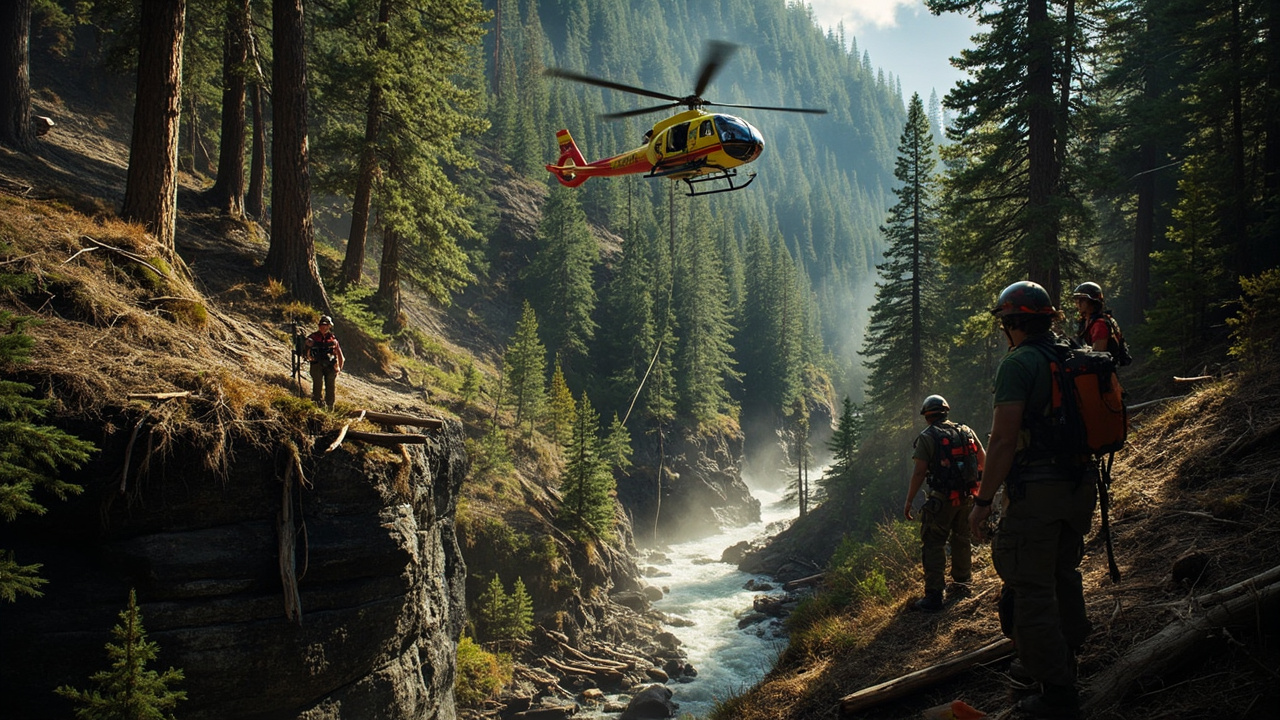
Mary Beth Granbery, 72, of Mount Shasta, was found alive on Sunday, Oct. 4, 2026, at the bottom of a steep embankment along Cabin Creek in Shasta County after leaving for a multi-day camping trip on Sept. 28 and suffering a fall followed by days of exposure. Search teams from Siskiyou and Shasta counties located her on Sunday morning, and California Highway Patrol Air Operations lifted her from the drainage for transport to Mercy Medical Center in Redding, according to ABC News. Officials said she had sustained multiple significant injuries from the fall and from exposure, and that her camper van had been located the prior day at the Cabin Creek Trailhead. The case, reported publicly on Oct. 7, is now a focused lesson for wilderness readiness: filed trip details, a vehicle clue at a trailhead, rapid joint-agency search, and helicopter extraction turned a week-long solo emergency into a live rescue, as described by CBS Sacramento.
A week alone ends in a live find
The core sequence is short and verified.
Granbery departed for a multi-day camping trip on Sept. 28 at the Cabin Creek Trailhead in Shasta County, California, according to ABC News. She did not return to work on Friday, Oct. 2, which prompted concern from family and a missing-person report to the Siskiyou County Sheriff's Office.
Her camper van was found on Saturday, Oct. 3, at the trailhead, according to the Siskiyou County Sheriff's Office account summarized by ABC News. That single clue fixed the search location and allowed ground teams to concentrate on trails, drainages, and slopes radiating from Cabin Creek rather than a wider regional search.
On Sunday, Oct. 4, searchers located Granbery at the bottom of a steep embankment along Cabin Creek, according to ABC News. She had multiple significant injuries attributed to a fall and to exposure. She was airlifted to a medical center for treatment and later reunited with loved ones who had assisted the operation and supplied critical information.
A separate account from CBS Sacramento said she was conscious when found near Cabin Creek on the morning after her vehicle was discovered, with serious injuries from a fall and exposure. That report said CHP Air Operations hoisted her from the trail to a landing zone before onward transport to Mercy Medical Center in Redding.
Where it happened: Cabin Creek Trailhead
Understanding the map explains why the search was difficult and why the van mattered.
The Cabin Creek Trailhead sits in far Northern California, about 40 miles north of Redding and roughly 180 miles north of Sacramento, according to CBS Sacramento. The Redding Record Searchlight placed the trailhead about 5 miles east of Castle Crags State Park and Castella and a 9-mile drive south of Highway 89 at McCloud.
The trip area lies within the Shasta-Trinity National Forest, according to the Redding Record Searchlight. The Sacramento Bee identified Granbery as a Mount Shasta resident and placed the find along Cabin Creek after coordinated work by Siskiyou and Shasta county sheriff's search-and-rescue teams.
For readiness planning, the geography takeaway is practical. A named trailhead, a parked camper van, and a known departure date gave rescuers a point last seen and a date last heard from. According to CBS Sacramento, Granbery had last been heard from Sept. 28 and had been expected back by Oct. 1, while ABC News reported she departed Sept. 28 and was reported missing Oct. 2 after missing work. Those related dates narrowed the window when she could have been moving, falling, or waiting for help.
Terrain that complicated search and survival
Crews described steep, obstructed ground that slowed foot travel and limited visibility.
The search area included steep terrain, creeks, trail debris and downed trees, according to the Shasta County Search and Rescue Jeep Patrol account cited by ABC News. CBS Sacramento described steep canyons, creeks and downed trees that made the rescue especially difficult.
The Sacramento Bee reported that Granbery was found at the bottom of a steep embankment in Shasta County. The Redding Record Searchlight said she had fallen into the Cabin Creek drainage and was recovered from a steep gulch near the trail.
That combination — a slope, a drainage, woody debris, and moving water — creates three linked problems for a solo traveler. A fall can prevent self-extraction. A low position beside a creek can shelter a person from wind while also hiding them from trail-level searchers. And downed timber forces rescuers to move slowly, check compartments of terrain piece by piece, and rely on air support to spot clues or insert and extract personnel.
The lesson is not to avoid drainages altogether, but to treat them as high-consequence zones in a route plan. Tell a contact which trailhead you will use, which general direction you intend to travel, and when you will check back in. Rangers with the Shasta-Trinity National Forest cautioned guests to always tell someone when and where they are going in the forest, when they plan to return, and to check in when they get back, according to the Redding Record Searchlight.
How the joint rescue came together
The operation moved from clue to containment to extraction in about 24 hours.
Siskiyou County Sheriff's Office and Shasta County Sheriff's Office launched a joint search and rescue operation on Saturday with help from volunteers and California Highway Patrol Air Operations, according to ABC News. Family members found her vehicle Oct. 3 at the Cabin Creek Trailhead, prompting a joint search by Shasta and Siskiyou county crews, according to CBS Sacramento.
Search and rescue teams with Siskiyou and Shasta counties combed the trail area over the weekend and found the missing hiker on Sunday, Oct. 4, according to the Redding Record Searchlight. The Siskiyou County Sheriff's Office credited search-and-rescue volunteers, the Shasta County Sheriff's Office, CHP air crews and Granbery's family and friends with helping locate her, according to the Sacramento Bee.
Air support proved decisive at the end. Granbery was located Sunday at the bottom of a steep embankment with multiple significant injuries and was airlifted to a medical center, according to ABC News. A California Highway Patrol helicopter airlifted Granbery from the Cabin Creek drainage to Mercy Medical Center in Redding for treatment, according to the Sacramento Bee.
CBS Sacramento added operational detail: CHP Air Operations hoisted her from the trail and flew her to a landing zone, after which she was taken to Mercy Medical Center in Redding. That two-stage movement — hoist from confined terrain, then transfer to a hospital — is common when slopes, trees, or canyon walls prevent a direct landing.
Injuries, exposure, and hospital care
Officials consistently linked her condition to two causes: trauma from a fall and physiological stress from days outdoors.
ABC News reported multiple significant injuries from a fall and from exposure. CBS Sacramento said she was conscious but had suffered serious injuries from a fall and exposure. The Sacramento Bee said she had suffered multiple injuries in a fall and from exposure.
The Redding Record Searchlight said she was severely injured from the fall and also in bad health due to exposure to the weather for several days. CBS Sacramento reported she was in stable condition and her injuries were not life-threatening.
The distinction matters for wilderness preparation. Trauma limits mobility. Exposure compounds trauma by draining heat, fluids, and decision-making capacity over successive nights. In this incident, survival through Sept. 28 to Oct. 4 meant enduring multiple day-night cycles while injured and unable to return to a vehicle parked a short map distance but a long functional distance away.
No agency account published by Oct. 7 detailed clothing, shelter, food, water, or signaling gear she carried. The survival lesson therefore stays general: assume an injury could prevent a walk-out, and build a trip plan that triggers a search if you do not return.
What officials want backcountry travelers to do differently
Agencies used the rescue to repeat basic, proven travel safeguards.
Officials reminded the public to inform someone of departure and expected time of return when setting out for a trip, and to stay in place if lost so as not to expand the search area unnecessarily, according to ABC News. The Shasta County Search and Rescue Jeep Patrol used the rescue as a reminder for people heading outdoors to plan ahead, according to CBS Sacramento.
That group said, in a statement quoted by CBS Sacramento: Help us help you with planning, preparation, telling someone when and where you are going with your expected return date and time too.
Forest rangers echoed the same point about itinerary and check-in, according to the Redding Record Searchlight. The emphasis on expected return date and time is deliberate. A vague plan — going camping for a few days — does not tell anyone when to call for help. A specific plan — Cabin Creek Trailhead, departed Sept. 28, expected back Oct. 1, call if no contact by Oct. 2 — creates an automatic trigger.
Staying put after becoming lost or injured is the companion rule. Movement without a clear route to safety can carry an injured person farther from the last known point, across drainages, and out of the initial search segment. Search managers build assignments outward from the van, trail register, or intended route. Every unnecessary mile widens the area that must be cleared.
Readiness checklist drawn from this rescue
This section applies only the patterns confirmed in this incident, stated as general preparation.
File a written trip plan with a trusted contact before a solo multi-day outing. Include trailhead name, travel dates, expected return date and time, vehicle description and parking location, and instructions for when to notify authorities. The van at Cabin Creek Trailhead focused this search; without that clue, teams would have faced a far larger problem.
Set a firm check-in and an overdue action time. In this case, a missed return to work on Oct. 2 led to a report, a vehicle find on Oct. 3, and a live find on Oct. 4, according to the agency timeline summarized by ABC News and CBS Sacramento. A pre-agreed call time can start that chain sooner.
Treat steep creek drainages as no-fall zones when traveling alone. The find site at the bottom of a steep embankment along Cabin Creek shows how quickly a slip can become an immobilizing event, according to the Sacramento Bee. Plan turnaround points, allow margin for fatigue, and avoid shortcuts across unstable slopes.
Support searchability if you cannot self-rescue. Park at the stated trailhead, stay on or near the planned corridor when possible, and if injured and unable to move safely, remain in place to keep the search area tight, consistent with the stay-in-place guidance cited by ABC News.
Recognize that joint search plus air support takes time to assemble. Volunteer teams, two sheriff's offices, and CHP Air Operations converged over a weekend to complete this rescue, according to the Sacramento Bee. A traveler should carry the means to survive nights out while that system activates, and should expect extraction to involve a hoist or landing-zone transfer where terrain blocks landing, as described by CBS Sacramento.
Sources referenced
- 72-year-old hiker missing for days in California forest found alive - ABC News (https://abcnews.com/US/72-year-hiker-missing-days-california-forest-found/story?id=137063323)
- Northern California hiker found alive after days missing in remote terrain - CBS Sacramento (https://www.cbsnews.com/sacramento/news/california-remote-shasta-county-missing-hiker-rescued/)