TL;DR: Search Continues, Tactics Shift to Clue Hunt
The search for 26-year-old Neil Gehring in Olympic National Park will continue, with Olympic National Park's Search and Rescue team now concentrating on uncovering new clues to direct future field work after ten days of aerial, ground, drone and dog-team coverage along his expected route, according to the U.S. National Park Service news release dated September 11, 2026.
PORT ANGELES, Wash. — Investigators said the inquiry remains active and asked anyone who had been in the vicinity or held relevant information to contact investigators by email at [email protected] or by telephone at 888-653-0009 through the National Park Service Investigative Services Branch Tip Line, according to that same U.S. National Park Service release.
The update marked a transition rather than a stand-down. Field crews had worked the anticipated travel corridor for ten days without locating Gehring, and park officials said attention would turn to developing fresh leads, according to the U.S. National Park Service. The park also expressed appreciation for volunteer search and rescue groups that joined the effort.
Gehring departed Madison Falls Trailhead on August 31 for what his backcountry permit described as a cross-country movement from Boulder Lake toward Appleton Pass, with a planned return to Madison Falls Trailhead on September 1, according to the U.S. National Park Service. He was reported past due at 6:30 a.m. on September 2, and response work started promptly after that notice, according to the U.S. National Park Service.
What His Filed Plan Said
A One-Night Traverse That Did Not Return on Schedule
The permit stands as the central planning document in this case. It recorded a start at Madison Falls Trailhead on August 31, a cross-country traverse linking Boulder Lake to Appleton Pass, and a return to the starting trailhead on September 1, according to the U.S. National Park Service.
That written itinerary gave search managers an initial corridor. Teams concentrated subsequent aerial, ground, drone and canine work along that anticipated path during the ten-day period described in the September 11 update, according to the U.S. National Park Service.
The timing of the alarm is also documented. Gehring was listed as overdue at 6:30 a.m. on September 2, and search activity commenced immediately after notification, according to the U.S. National Park Service. Coverage from KOMO News on September 11, 2026 likewise noted that teams began looking for him soon after the September 2 overdue report.
For backcountry readiness, the sequence underscores why a written route and return date matter. In this incident, the permit supplied the Boulder Lake-to-Appleton Pass connection and the September 1 return target, and the September 2 morning report triggered immediate deployment, according to the U.S. National Park Service. Hikers can apply that pattern generally by leaving a specific itinerary and a firm check-in time with a trusted contact and the relevant land manager.
Ten Days of Coverage Along the Expected Route
Air, Ground, Drone and Dog Teams Worked the Corridor
The September 11 federal update summarized the first phase as multi-tool coverage. Aerial resources, ground personnel, uncrewed aircraft and dog teams examined terrain along Gehring's expected route across the previous ten days, according to the U.S. National Park Service.
That combination reflects the difficulty of locating a person away from maintained tread. Off-trail travel between basins and passes can place a hiker out of sight of other parties, increasing reliance on systematic area examination rather than trail encounters.
Reporting on September 10, 2026 by The Seattle Times noted that the National Park Service and Seattle Mountain Rescue were involved in the operation. The same reporting, citing KING 5, said mountain rescue personnel employed a drone capable of scanning broken ground and producing maps for field teams, while artificial intelligence assisted in reviewing collected imagery for patterns, including apparel colors that are difficult to discern across an extensive area.
A separate September 10, 2026 report by MyNorthwest.com, citing a Seattle Mountain Rescue social-media post, said the volunteer group had assigned more than a dozen people to assist. That account said the organization uses drones, thermal imaging and artificial intelligence to examine broad zones.
Anyone preparing for cross-country travel can take a general lesson from that search mix: assume you may need to be visible from the air, from a trail-side search party, from an overhead sensor and from a canine team. Bright shelter fabric, light discipline at night for thermal detection, and staying as close as practical to a filed line when injured are general practices that align with how these teams look, though the sources do not prescribe specific gear for this route.
Who Searchers Are Seeking
Description, Age and Possible Shelter Color
Gehring is 26 years old, according to the U.S. National Park Service reporting carried in KOMO News, The Seattle Times, MyNorthwest.com and the Peninsula Daily News.
The National Park Service description lists him at about 5 feet 5 inches tall and 130 pounds, with short black hair, a slender frame and brown eyes, according to The Seattle Times report of September 10, 2026. KOMO News on September 11, 2026 gave matching height, weight, hair and build details. The Peninsula Daily News on September 10, 2026 likewise listed a height of 5 feet 5 inches, a weight of 130 pounds, short black hair, a slender build and brown eyes.
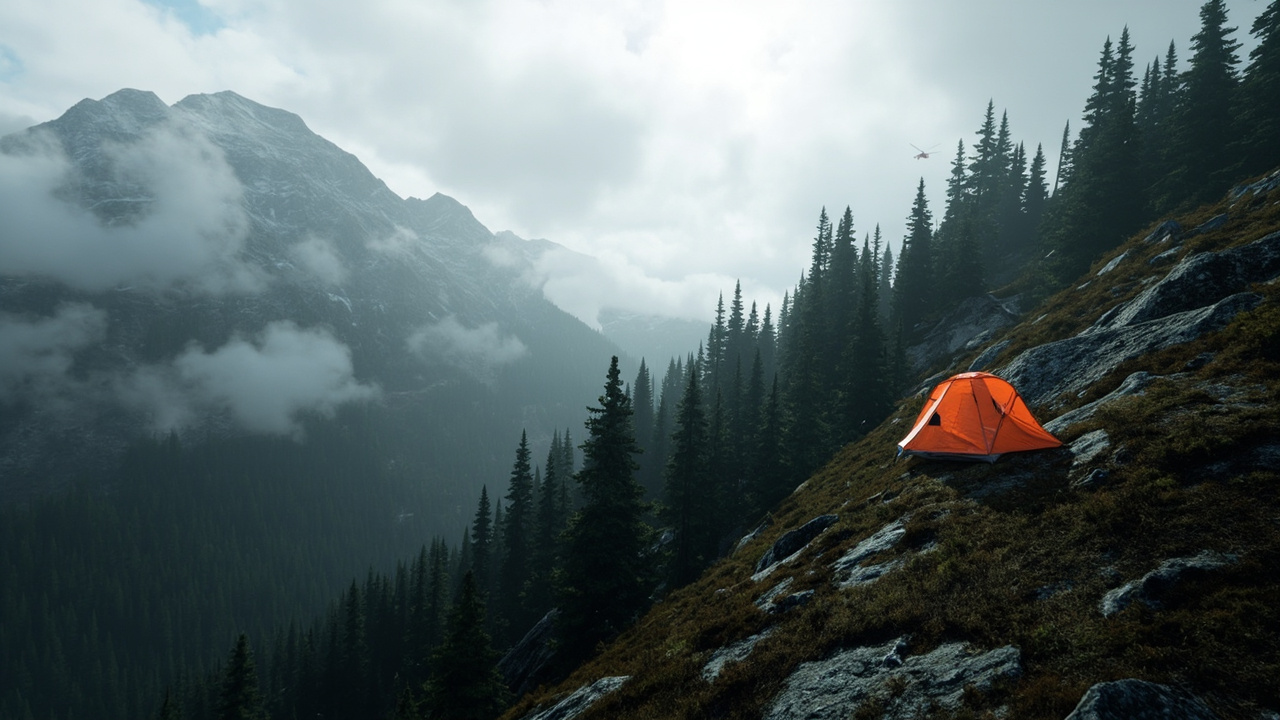
Investigators added one equipment detail that could aid visual detection. His tent may have been orange, according to The Seattle Times, KOMO News and MyNorthwest.com summaries of National Park Service information.
That color note matters for anyone who was out between August 31 and September 2. An orange shelter, orange panels or other warm-toned fabric seen near Boulder Lake, Appleton Pass or the approaches from Madison Falls Trailhead could warrant a tip, and officials asked that such observations be sent to [email protected] or called in to 888-653-0009, according to the U.S. National Park Service.
The Peninsula Daily News quoted Clallam County Chief Criminal Deputy Amy Bundy saying little was known about Gehring's background beyond that he works as a wildland firefighter. That occupational detail did not appear in the federal release, and investigators have not linked it publicly to his route choice.
Who Searched and How Coordination Changed
County Teams, State Request and Volunteer Surge
Multiple organizations entered the operation after the September 2 alert. The National Park Service and Seattle Mountain Rescue were engaged in the search, according to The Seattle Times.
Clallam County participation flowed through the state system. The Clallam County Sheriff's Office Search and Rescue unit answered a State Emergency Operations Center appeal directed to all search and rescue organizations, Chief Criminal Deputy Amy Bundy said, as quoted by the Peninsula Daily News on September 10, 2026. Bundy said county volunteers assisted from Friday through Monday, according to that Peninsula Daily News account.
The county effort employed helicopters, drones and K9s during its assignment, Bundy said, as quoted by the Peninsula Daily News. Bundy also said she could not supply a roster of every agency that answered the state-level call for help, according to the Peninsula Daily News.
By September 10, county-level field involvement had paused. Bundy said she could not confirm whether the overall search had been halted, but said the State EOC request for search assistance had been canceled, so the Clallam County team was no longer actively looking for Gehring, according to the Peninsula Daily News. The September 11 federal statement then clarified the park-level posture: the search would proceed with a shift toward locating new clues to shape later field deployments, according to the U.S. National Park Service.
Olympic National Park thanked the volunteer search and rescue teams that supported the work, according to the U.S. National Park Service. That acknowledgment followed a deployment that included county volunteers, Seattle Mountain Rescue personnel and other groups operating under park coordination.
For trip planning, the coordination timeline shows why an early overdue notice helps. The September 2 morning report allowed notification, state-level outreach and volunteer mobilization while the trailhead start date of August 31 remained recent, according to the U.S. National Park Service and the Peninsula Daily News. Backpackers can mirror that safeguard generally by agreeing in advance on the exact hour a contact should call for help if they do not return.
What Investigators Want Now
Tips, Photos and Time-Stamped Sightings
The active request is narrow: new clues. Olympic National Park's Search and Rescue team will prioritize finding fresh information to steer coming field efforts, according to the U.S. National Park Service.
Officials asked that anyone who had been in the area or possessed information that could aid the search write to [email protected] or telephone the National Park Service Investigative Services Branch Tip Line at 888-653-0009, according to the U.S. National Park Service. The Seattle Times, KOMO News, MyNorthwest.com and the Peninsula Daily News repeated those same two contact paths.
Useful tips in such cases generally include the date, time and mapped location of any encounter, photographs or video showing other hikers, tents or tracks, and notes on direction of travel. Those categories reflect standard investigative needs and fit the park's call for area visitors to come forward, though the September 11 notice does not list evidence types.
Wilderness travelers who were near Madison Falls, Boulder Lake or Appleton Pass around August 31 through September 2 should review phone images, GPS tracks and trail-register entries before calling. Even a distant view of an orange tent, a lone trekker on a cross-country slope, or an empty camp that seemed out of place could help narrow the next search polygon when reported with coordinates and timestamps.
The investigation remains open, according to the U.S. National Park Service. No finding or closure was announced by the September 11 cutoff, and park officials framed the next phase as clue-driven rather than route-sweep driven.
Sources referenced
- Investigators Continue to Seek Tips in Search for Missing Person Neil Gehring - Olympic National Park (U.S. National Park Service) (https://www.nps.gov/olym/learn/news/investigators-continue-to-seek-tips-in-search-for-missing-person-neil-gehring.htm)
- Hiker still missing in Olympic National Park after more than a week | The Seattle Times (https://www.seattletimes.com/seattle-news/hiker-still-missing-in-olympic-national-park-after-more-than-a-week/)