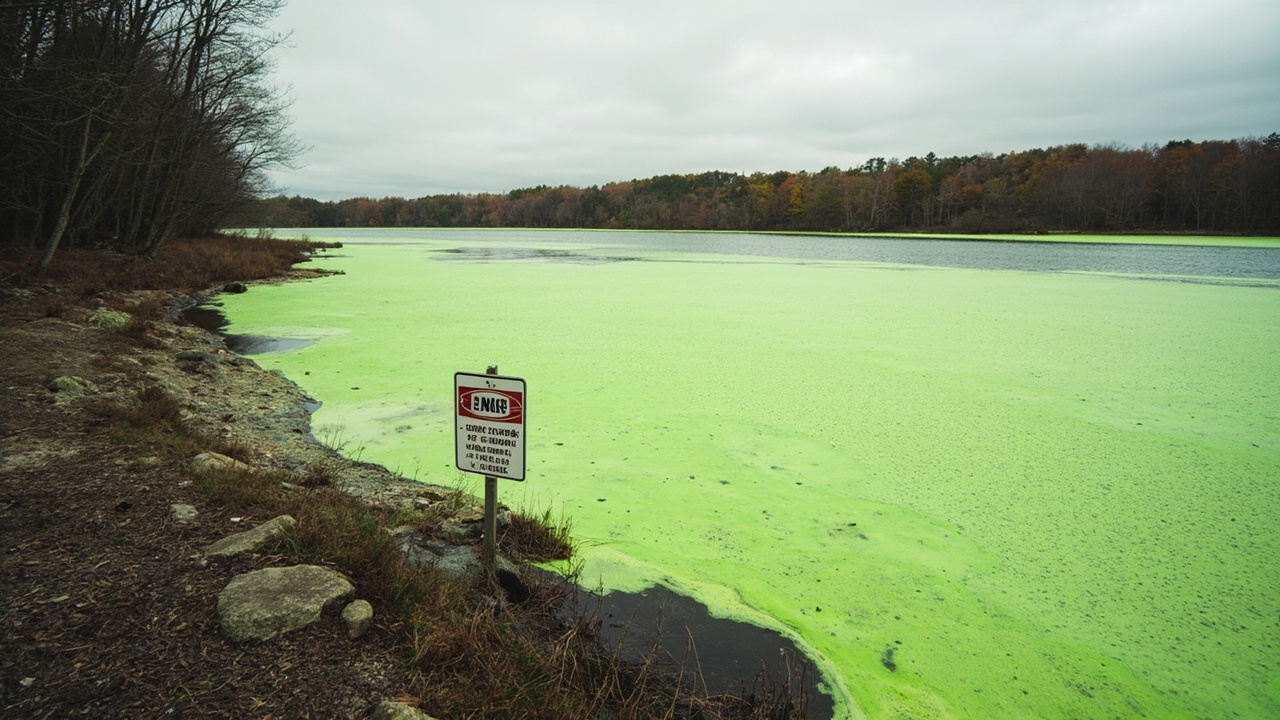
TL;DR: Rhode Island health and environmental officials advise avoiding all contact with Johnson's Pond in Coventry after water samples exceeded the advisory threshold for blue-green algae toxins.
New advisory for Johnson's Pond
The Rhode Island Department of Health (RIDOH) and the Rhode Island Department of Environmental Management (DEM) are advising people to avoid contact with Johnson's Pond in Coventry due to harmful algae blooms, known as HABs. The joint recommendation was published on Monday, October 05, 2026, according to the Rhode Island Department of Environmental Management release titled "RIDOH and DEM Recommend Avoiding Contact with Johnson's Pond."
Water samples were collected by DEM and tested by RIDOH's State Health Laboratories, according to that DEM announcement. Initial samples collected at this location exceeded the advisory threshold. The finding triggered the recommendation to stay out of the water and to treat all recreation at the pond as high risk to health.
All recreation, including swimming, fishing, boating and kayaking, is identified as high risk and recommended to be avoided at this location. The advisory recommendation remains in effect until further notice. To confirm the water is free from toxins and high cell counts, water samples will be collected to lift the advisory when the bloom has cleared from the affected waterbody.
The parallel notice from the Department of Health, titled "RIDOH and DEM Recommend Avoiding Contact with Johnson's Pond," carries the same location, cause, sampling roles, recreation list, threshold result, and until-further-notice status. Together, the two state postings establish Johnson's Pond in Coventry as the subject waterbody, HABs as the reason, laboratory testing as the basis, and avoidance of every listed activity as the protective action.
Why blue-green algae triggers avoidance
This HAB is caused by blue-green algae, also known as cyanobacteria, which are naturally present in bodies of water. HABs can produce toxins which can be harmful to humans and animals, according to the Rhode Island Department of Environmental Management.
Naturally present organisms can still create hazardous conditions when bloom conditions develop. In this event, the state laboratories found levels above the line used to advise against contact. That laboratory result is the reason officials moved from watchfulness to a direct avoidance recommendation.
Use caution in all areas of Johnson's Pond as HABs can move locations in ponds and lakes. Johnson's Pond contains many poorly flushed coves that may exhibit bloom conditions. A cove that looks clear during one visit can develop visible accumulation later because wind, currents, and limited flushing shift material around the pond.
For backcountry and shoreline readiness, the practical meaning is to treat the entire pond as affected rather than searching for a clean entry point. Officials direct caution across all areas, not only near the spot where the first elevated sample was taken. The warning applies to the named pond in Coventry, not to a single dock, beach, or cove.
What not to drink, eat, or let pets do
People should not drink untreated water or eat fish from affected waterbodies. Pet owners should not allow pets to drink or swim in this water, according to the Rhode Island Department of Environmental Management.
That food and water guidance matters for wilderness planning because lake water, even when filtered through improvised methods, is classified here as untreated water that should not be consumed. Fish taken from an affected waterbody are likewise identified as something people should not eat while the advisory is active.
Dogs and other animals face exposure through drinking, swimming, licking wet fur, and wading through shoreline scum. The state direction for pets is explicit: no drinking and no swimming in this water. Keeping animals leashed away from the shoreline, away from floating mats, and away from coves with limited flushing reduces the chance of ingestion or skin contact.
The advisory recommendation remains in effect until further notice. To confirm the water is free from toxins and high cell counts, water samples will be collected to lift the advisory when the bloom has cleared from the affected waterbody. Until that testing-based decision is announced, the drinking, fishing, swimming, and pet-contact limits stay in place.
How exposure can affect health
Skin contact with water containing HABs can cause symptoms such as skin rashes, sore throat and irritation of the eyes and nose, according to the Department of Health notice. Swallowing water containing HABs can cause stomachache, diarrhea, vomiting and nausea.
More serious, but less common health effects associated with swallowing contaminated water may affect the liver and nervous system, cause irregular heartbeat, dizziness, or seizures. The distinction between frequent irritation or gastrointestinal symptoms and less common organ, heart rhythm, balance, or seizure-related effects helps outdoor groups decide when self-care is insufficient and professional care is needed.
Young children, pets and people with certain underlying health conditions or who are immunocompromised may be at greater risk for illness. Anyone who experiences symptoms after contact with water containing HABs should contact a healthcare provider. Children may swallow more water during play, pets may drink directly from the pond, and people with underlying conditions or compromised immune response have less margin for exposure.
If you feel sick after contact, call a healthcare provider, according to the state guidance. The instruction covers both skin-contact symptoms and illness after swallowing water. It does not set a waiting period at home before calling when symptoms follow HAB contact.
Decontamination steps after contact
If you or your pet come into contact with a HAB, rinse your skin with clean water right away. Shower and wash your clothes when you get home, according to the Department of Health.
If your pet was exposed, wash it with clean water immediately and don't let it lick algae from its fur. Preventing licking matters because residue on coats can become an ingestion route after the animal leaves the water. Clean water is specified for both human rinsing and animal washing.
Call a vet if your pet shows signs of illness like tiredness, no eating, vomiting, diarrhea or other symptoms within a day. The one-day window gives pet owners a concrete observation period after washing. Tiredness, loss of appetite, vomiting, diarrhea, or other symptoms within that period call for veterinary contact rather than continued observation alone.
If you feel sick after contact, call a healthcare provider. Rinse your skin with clean water right away, then shower and wash your clothes when you get home. Those three personal steps — immediate rinse, later shower, and laundry — are listed as the response sequence for people.
How to recognize suspect water
Affected waters may exhibit bright to dark green scum along the shoreline, with thick algae floating on the surface. It may resemble green paint, pea soup, or green cottage cheese, according to the Rhode Island Department of Environmental Management. If you see water like this, people and pets should avoid contact with the water.
Shoreline scum, floating thickness, and paint-like, soup-like, or cottage-cheese-like appearance are the visual cues named in the advisory. Poorly flushed coves deserve extra attention because Johnson's Pond contains many such coves that may exhibit bloom conditions. Calm inlets can collect material that open water disperses.
Visual inspection alone does not clear water for use. Water samples were collected by DEM and tested by RIDOH's State Health Laboratories to support the current decision, and water samples will be collected to lift the advisory when the bloom has cleared. Clear-looking water during an active advisory period is still covered by the recommendation to avoid swimming, fishing, boating, and kayaking.
Reporting, tracking, and recent context
To report suspected blue-green algae blooms, contact DEM's Office of Water Resources at [email protected] or call 401-222-4700, Press 3, and select Office of Water Resources. If possible, send a photograph of the reported algae bloom.
For more information and the Cyanobacteria Tracker Dashboard that lists current advisories and data, visit www.dem.ri.gov/bluegreen, according to the Department of Health. The dashboard is identified as the place to find current advisories and data rather than relying on older posts or appearance alone.
HAB conditions can change quickly in Rhode Island waters. A separate state release titled "RIDOH and DEM Lift Advisory at Lake Tiogue and Oak Swamp Reservoir," added October 1, 2026, said the recommendation had been lifted at Lake Tiogue in Coventry and Oak Swamp Reservoir in Johnston after the HAB caused by blue-green algae had cleared. Recent water testing laboratory results there showed algae levels were low and no toxins were detected, meeting safety guidelines.
That September 18, 2026 lifting action also warned that toxins may persist in the water after a blue-green algae bloom is no longer visible. For Johnson's Pond, no such lifting finding had been announced in the October 05, 2026 advisories. Initial samples there exceeded the advisory threshold, and the avoidance recommendation remains in effect until further notice pending follow-up sampling.
Sources referenced
- RIDOH and DEM Recommend Avoiding Contact with Johnson’s Pond | Rhode Island Department of Environmental Management (https://dem.ri.gov/press-releases/ridoh-and-dem-recommend-avoiding-contact-johnsons-pond-0)
- RIDOH and DEM Recommend Avoiding Contact with Johnson’s Pond | Department of Health (https://health.ri.gov/press-releases/ridoh-and-dem-recommend-avoiding-contact-johnsons-pond?language=en)