TL;DR: The Dome Fire in Yosemite National Park reached 95% containment on the evening of Tuesday, October 13, 2026, with its 6,788-acre perimeter unchanged for days and command scheduled to return to the park on Thursday, October 15.
The newest verified fact in this October 13 news cycle is the evening jump. According to Dome Fire Reaches 95 Percent; Yosemite Takes Back Command Thursday — Outdoor Unc, a federal incident report filed at 8:15 p.m. Tuesday raised containment to 95%, up from 86% that morning, with assigned personnel falling to 596 from 746 and acreage holding at 6,788. Closures did not change with that evening filing.
That single update reframes the day. The morning had already shown strong progress, but the evening filing put the incident within striking distance of full containment. The fire footprint stayed static, interior heat continued to produce only light smoke, and the operational focus remained on equipment removal and land repair rather than line construction.
What changed on Tuesday, October 13
Tuesday brought two containment numbers, hours apart. The morning operational picture listed 86% containment, according to Dome Fire Update, October 13, 2026 (morning) - Yosemite National Park (U.S. National Park Service). The evening federal report then listed 95%, according to Outdoor Unc.
The personnel count moved down in step with the containment gain. The morning federal incident data showed 746 people still assigned, down from more than 900 the previous week, with an estimated final cost of $60 million, according to Outdoor Unc. The evening filing showed 596 people still assigned, according to the same Outdoor Unc update.
Acreage did not move between the two reports. Both the morning and evening accounts listed 6,788 acres, with no perimeter change in several days, according to Outdoor Unc and the National Park Service morning update. The estimated containment date was listed as Oct. 17 on the Dome Fire incident information page at inciweb.wildfire.gov, according to the San Luis Obispo Tribune.
Where the fire stands after a month
The Dome Fire had been slow burning for a full month near the community of Wawona and Chilnualna Falls at the park's southern entrance, according to the San Luis Obispo Tribune. By Tuesday it had burned 6,788 acres, closed a section of the park including multiple trails and a major tourist roadway, and caused the deaths of two firefighting personnel, helicopter pilots Greg King and Ryan Cutter, according to that same Tribune report.
Over the last week, the fire made minimal progression, burning within its established perimeters, according to the Tribune. Containment doubled over that broader period to 86% as of Tuesday morning, according to the same account.
Fire activity on Tuesday remained minimal. Any visible smoke was coming from interior pockets of heat, according to the National Park Service morning update and the Tribune. That pattern — a stable edge with heat inside — explains why crews could shift toward patrol, mop-up and removal work while smoke impacts eased.
Contained does not mean controlled
Containment, usually expressed as a percentage, refers to the amount of a wildfire's perimeter that is surrounded by control lines designed to stop spread, according to the San Luis Obispo Tribune. A contained fire is completely encircled, including any spot fires, with further spread deemed unlikely, according to that same explanation.
This differs from a controlled fire, which is fully contained and extinguished along the interior of the control line, according to the Tribune. It was not clear when the Dome Fire would be fully controlled, according to that report.
For backcountry travelers, that distinction matters. A high containment number signals that the edge is holding, not that interior heat, hazard trees, smoke or closed trails have disappeared. The Dome Fire footprint on Oct. 13 still held interior heat and retained active closures despite the 86% morning and 95% evening containment figures.
Cleanup: hose, pumps, tanks and mule trains
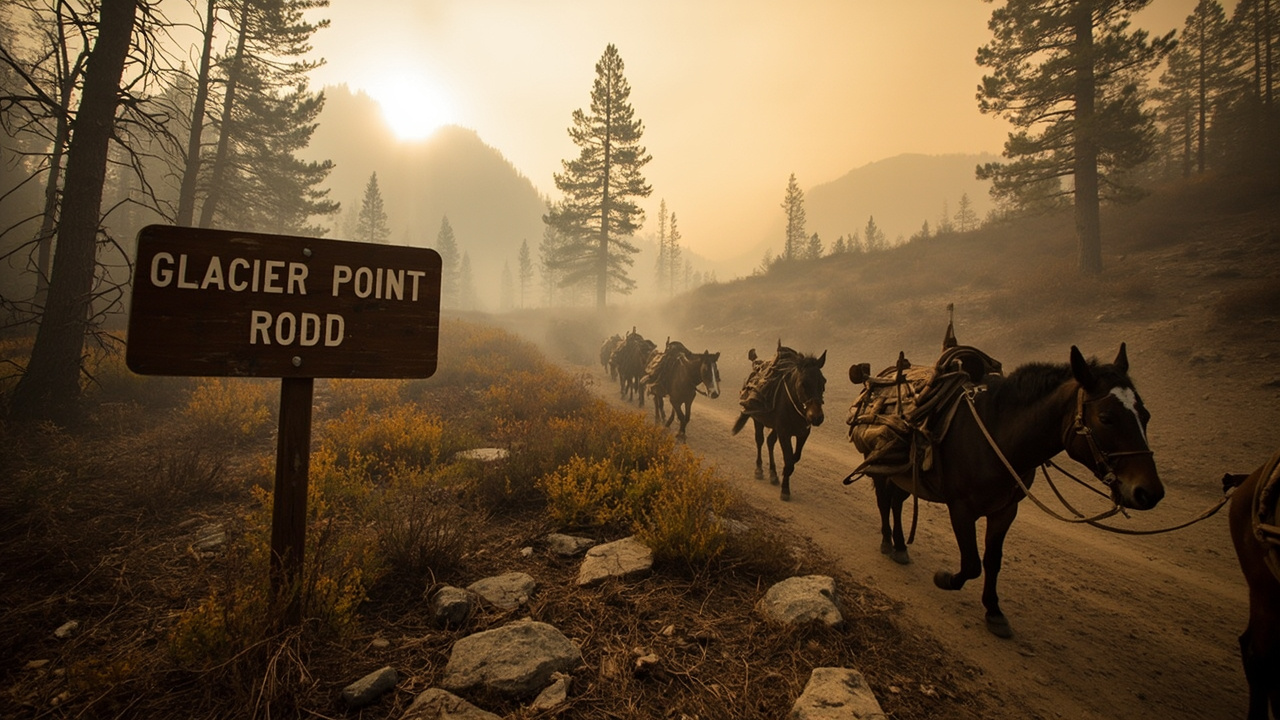
The work on Oct. 13 was cleanup. Firefighters on the east side continued patrolling and mopping up, while crews, mule trains and helicopters continued removing hose and equipment from remote wilderness areas, according to the National Park Service morning update.
The Tribune described the same east-side pattern: crews patrolled and mopped up while mule trains and helicopters removed hose and equipment from remote wilderness areas. The operation involved substantial material staged in difficult terrain, and aircraft plus pack stock offered the practical way to extract it without building new ground disturbance.
Suppression repair was underway to restore ground disturbed during firefighting operations, protecting sensitive natural and cultural resources and reducing the potential for erosion, according to the National Park Service morning update. Along secondary handlines, crews pulled berms back to match the natural terrain and scattered vegetation to help disguise the lines and limit water erosion, according to that update.
The Tribune, citing a final operational update released Tuesday, described the same repair prescription: pulling back berms to match the natural terrain and scattering vegetation to help disguise the lines and limit water erosion. Outdoor Unc likewise reported suppression repair had begun along secondary hand lines, with crews pulling berms back and scattering vegetation to hide the lines and limit erosion.
Command returns to Yosemite on October 15
California Interagency Incident Management Team 4 was scheduled to transfer command of the fire back to Yosemite National Park on Thursday, October 15, according to the National Park Service morning update. Outdoor Unc and the Tribune reported the same scheduled Thursday handoff.
The transfer marks a transition from a large incident-management organization to park-led management. It does not by itself reopen trails or declare the fire controlled. The incident still listed hundreds of assigned personnel on Tuesday evening, indicating continued patrol, repair and logistics needs after the handoff date.
Glacier Point Road had reopened to public traffic on Saturday, according to the Tribune. The National Park Service Oct. 12 update placed that reopening at 7 a.m. on Saturday, October 10, with a caution to drive carefully and watch for firefighters working along the road. Outdoor Unc confirmed on Oct. 13 that Glacier Point Road was open.
Weather: cold Tuesday, then warmer and drier
After a cold Tuesday with highs in the 40s, a warming, drying trend was expected to bring highs in the 50s and near 60 on Wednesday and Thursday, with light winds, according to Outdoor Unc. The National Park Service morning update described the same setup: a warming and drying trend as high pressure built across the area, with mostly light winds.
Specifically, highs Tuesday were likely to be in the 40s, with temperatures forecast to climb into the 50s and approach the 60s Wednesday and Thursday, according to that National Park Service update. Light winds reduced the immediate risk of wind-driven runs, but warming and drying can keep interior fuels available to smolder and produce visible smoke.
That forecast followed a cooler, unsettled stretch. The park's Oct. 12 update had described mostly cloudy skies, periods of light precipitation, fog and drizzle, freezing levels between 6,000 and 8,000 feet, and highs only in the 30s to lower 40s. The Oct. 13 warming trend therefore did not mean summer conditions, but rather a shift from near-freezing mountain air toward cool autumn days.
Smoke and air quality improve
No fire growth and low activity improved smoke impacts across Yosemite National Park and surrounding communities, according to the National Park Service morning update. Yosemite Valley experienced GOOD with brief periods of MODERATE smoke impacts again the prior day, and the forecast called for GOOD with very brief MODERATE smoke on Oct. 13, according to that update.
Overall GOOD smoke impacts were expected to continue across the remainder of the outlook area, with MODERATE ozone levels possibly continuing to blow into Yosemite from the San Joaquin Valley in the afternoons, according to the same park update. GOOD smoke impacts were expected to continue through the week, according to that outlook.
The Tribune reported a similar air-quality picture: the air quality index for Yosemite Valley, Yosemite West, Mariposa, Wawona and El Portal were all listed as good for Tuesday into Wednesday, where it was expected to remain through the week. For visitors sensitive to smoke, the message was consistent across sources: impacts were down sharply, but brief moderate periods remained possible in the Valley.
What is open and what stays closed
Yosemite National Park was open and operating normally, with specified exceptions, according to the National Park Service morning update. Glacier Point Road was open, according to Outdoor Unc and the Tribune.
Every trail inside the active fire footprint remained closed, including all south- and eastbound trails from Glacier Point Road, Ostrander, Mono Meadow and Buena Vista, according to Outdoor Unc. The park update likewise listed all trails within the active fire footprint as currently closed, including all south and eastbound trails accessed from Glacier Point Road, with Buena Vista Trail also remaining closed.
Several named routes outside the footprint were open. The Chilnualna Falls, Alder Creek, Four Mile and Panorama trails were open, according to Outdoor Unc. More precisely, Alder Creek Trail was open north to the Deer Camp Trailhead, and Chilnualna Falls Trail was open from the trailhead east to Chilnualna Fall and Crescent Lake, according to the National Park Service morning update. Fire restrictions were currently in effect below 8,000 feet in Yosemite National Park, according to that same park update.
For trip planning, the practical lesson from Oct. 13 is to check the current Dome Fire safety closure map before leaving the trailhead, carry an alternate route, and treat closed trails as closed even when the road beside them is open and the sky looks clear.