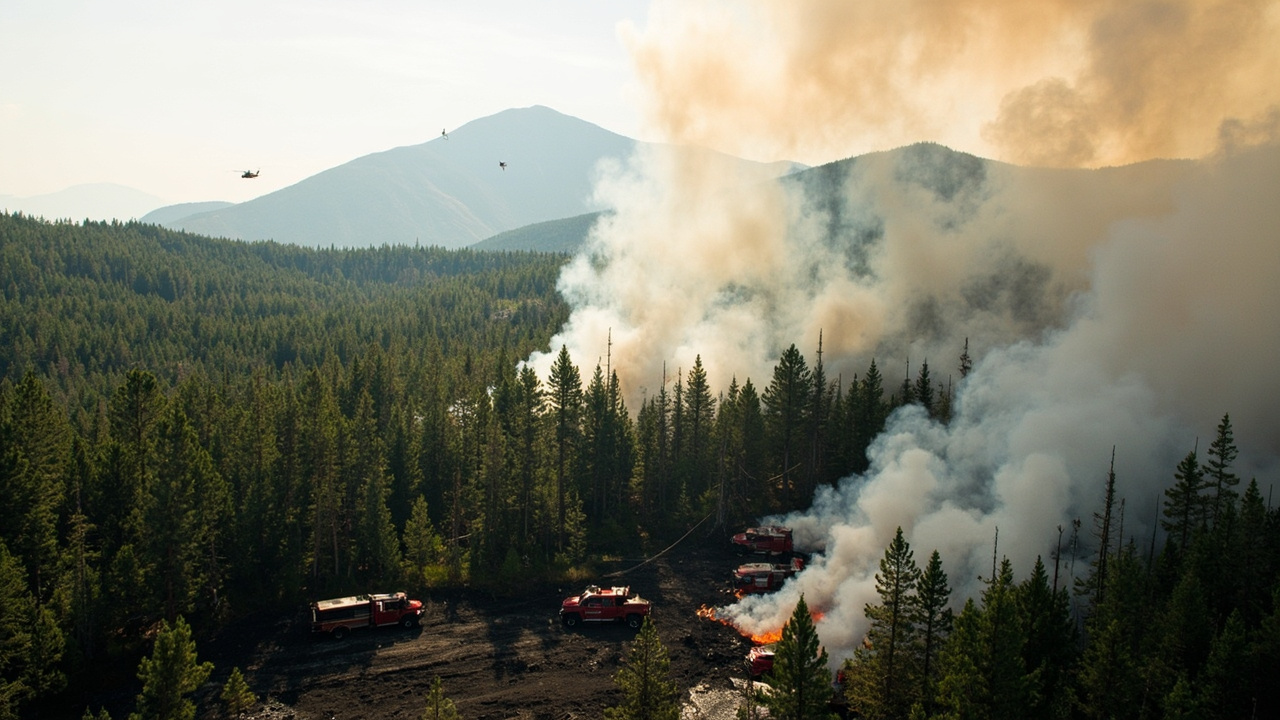
Wild River Fire Hits 856 Acres at 20% Containment
The Wild River Fire burning in White Mountain National Forest near the Maine-New Hampshire border is 20% contained and has scorched 856 acres, primarily in Coos County, NH — making it one of the largest wildfires in the forest's recorded history, according to Newsradio WGAN.
The fire ignited on November 1, 2026, southeast of Gorham, NH. Early estimates placed the burn area close to 1,000 acres after an overnight run driven by dry conditions, but updated aerial mapping revised that figure downward. By November 6, containment stood at just 11% before additional resources pushed it to 20%.
What Triggered the Fire — and Why It Spread So Fast
The U.S. Forest Service believes the blaze is human-caused, though the specific ignition source remains under investigation, according to WMTW. The region has been experiencing moderate drought conditions, as tracked by the U.S. Drought Monitor, which dried out leaf litter and underbrush across the forest floor and provided abundant fuel for rapid spread.
Incident commanders have cited prolonged dry spells as a key factor in the fire's behavior. The steep, rocky terrain surrounding the Wild River drainage also complicated early containment efforts, limiting where ground crews could safely work and forcing heavier reliance on aerial assets.
Forest Closure: Trails and Roads Off-Limits
In response to the fire's growth, the White Mountain National Forest issued a formal forest closure order restricting public access to affected corridors. The closure covers:
- Shelburne Trail
- Wild River Road
- Sections of High Water Trail and adjacent routes in the fire perimeter
According to Newsradio WGAN, the White Mountain National Forest posted detailed closure maps and status updates online to keep the public and firefighting personnel safe. Visitors who ignore closure orders risk both personal injury and interference with active suppression operations.
No evacuations of nearby communities had been ordered, and fire officials reported no significant structural threat as of the latest updates. However, the elevated fire risk remained subject to shifting weather conditions.
Firefighting Resources on the Ground
More than 140 firefighters from multiple states are assigned to the Wild River Fire incident, supported by a substantial aerial and mechanical package, according to Newsradio WGAN. Deployed assets include:
- Two helicopters conducting water drops and hotspot reconnaissance
- Multiple drones identifying active fire edges and inaccessible interior hotspots
- Six fire engines and several suppression modules securing containment lines
Crews are running a full suppression strategy, working to strengthen existing containment lines and prevent flare-ups from pushing the fire into unburned fuel. The combination of helicopter bucket drops and drone surveillance has been critical given the terrain's resistance to safe foot access in steeper sections.
Fire officials warned the public not to fly personal drones anywhere near the active fire zone, as unauthorized unmanned aircraft can ground the aerial assets that firefighters depend on for safety and effectiveness.
Historic Scale in New England Context
The Wild River Fire's acreage places it among the largest wildfires ever recorded in White Mountain National Forest, a fact reported by CNHI News in its coverage of the drought-driven blaze. That distinction has drawn attention from fire management professionals and conservationists who point to shifting fire risk patterns across the northeastern United States.
The U.S. Drought Monitor's classification of moderate drought across the region is central to understanding why a November fire reached this scale. Autumn in New England traditionally carries lower fire danger than spring, but the combination of a dry summer, low autumn precipitation, and desiccated ground cover created conditions that fire managers typically associate with western fire seasons.
According to CNHI News, incident commanders have connected the region's prolonged dry spells and broader climate trends to the increasing frequency and intensity of fire events in states like New Hampshire — a risk that land managers and emergency planners are being forced to reassess.
What Backcountry Travelers Need to Know
The Wild River Fire offers a direct lesson for anyone planning backcountry travel in the northeastern United States during dry autumn conditions. Forest closures are legally enforceable orders, not suggestions, and the White Mountain National Forest has made clear that violators risk both criminal penalties and direct conflict with firefighting operations.
Fire officials reminded the public of several fire safety protocols that apply throughout the region during elevated risk periods. Campfires must never be left unattended, and all coals and embers must be fully extinguished — not just visually dark — before a site is abandoned. These reminders came during a community meeting held November 5, where fire officials briefed local residents on the fire's status and answered questions about safety procedures, according to the notes from that briefing.
Monitoring local air quality is also critical for nearby residents and campers. Smoke from a fire burning nearly 900 acres in steep forested terrain can affect air quality across a wide corridor, particularly when wind shifts drive smoke toward populated valleys.
Outlook: Weather-Dependent Containment Timeline
Fire personnel stated that reaching full containment depends heavily on incoming weather patterns, specifically precipitation that could suppress remaining hotspots and reduce fire behavior. No firm containment date had been announced as of the most recent operational updates.
The White Mountain National Forest continues to publish closure maps and incident updates online. Community members in the Gorham area and across Coos County are encouraged to check those resources, follow all posted closures, and avoid any recreational access to the affected trail and road network until officials lift the order.
For backcountry travelers elsewhere in the region, the Wild River Fire is a clear signal: late-season drought can produce early-winter fire conditions that most northeastern hikers and campers have historically not had to plan around. Carry fire awareness into your pre-trip checklist the same way you would for any western wilderness destination.
Sources referenced
- Crews continue to battle White Mountain wildfire near ME/NH border (https://wgan.com/news/074470-crews-continue-to-battle-white-mountain-wildfire-near-me-nh-border/)
- Deep drought fuels NH forest fire that has reached historic scale (https://www.cnhi.com/rss_feed/deep-drought-fuels-nh-forest-fire-that-has-reached-historic-scale/)